
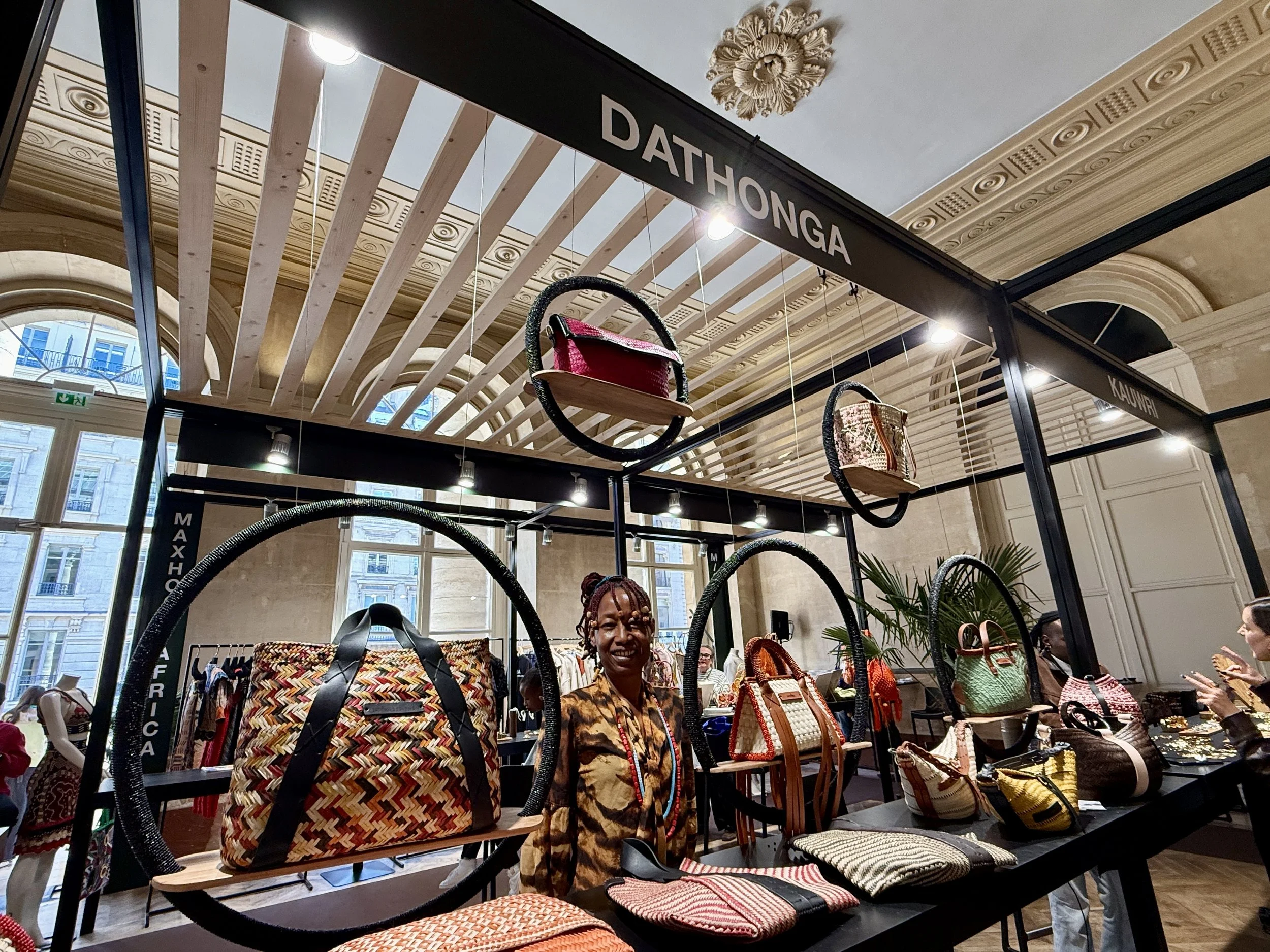
Brands from North Africa to Sub-Saharan Africa have been showcasing their craftsmanship to an international market, which will bring growth to the continent’s creative economy…
During Paris Fashion Week, Canex and the Afreximbank, under the direction of Khanyi Mashimbye brought twenty fashion designers from Africa and the African diaspora to showcase their brands at Tranoï. Over a four-day period these brands have been able to meet with international fashion buyers and media to tell their sartorial stories and grow beyond their current status.
All twenty brands are doing great things. These are the ones we chatted with:
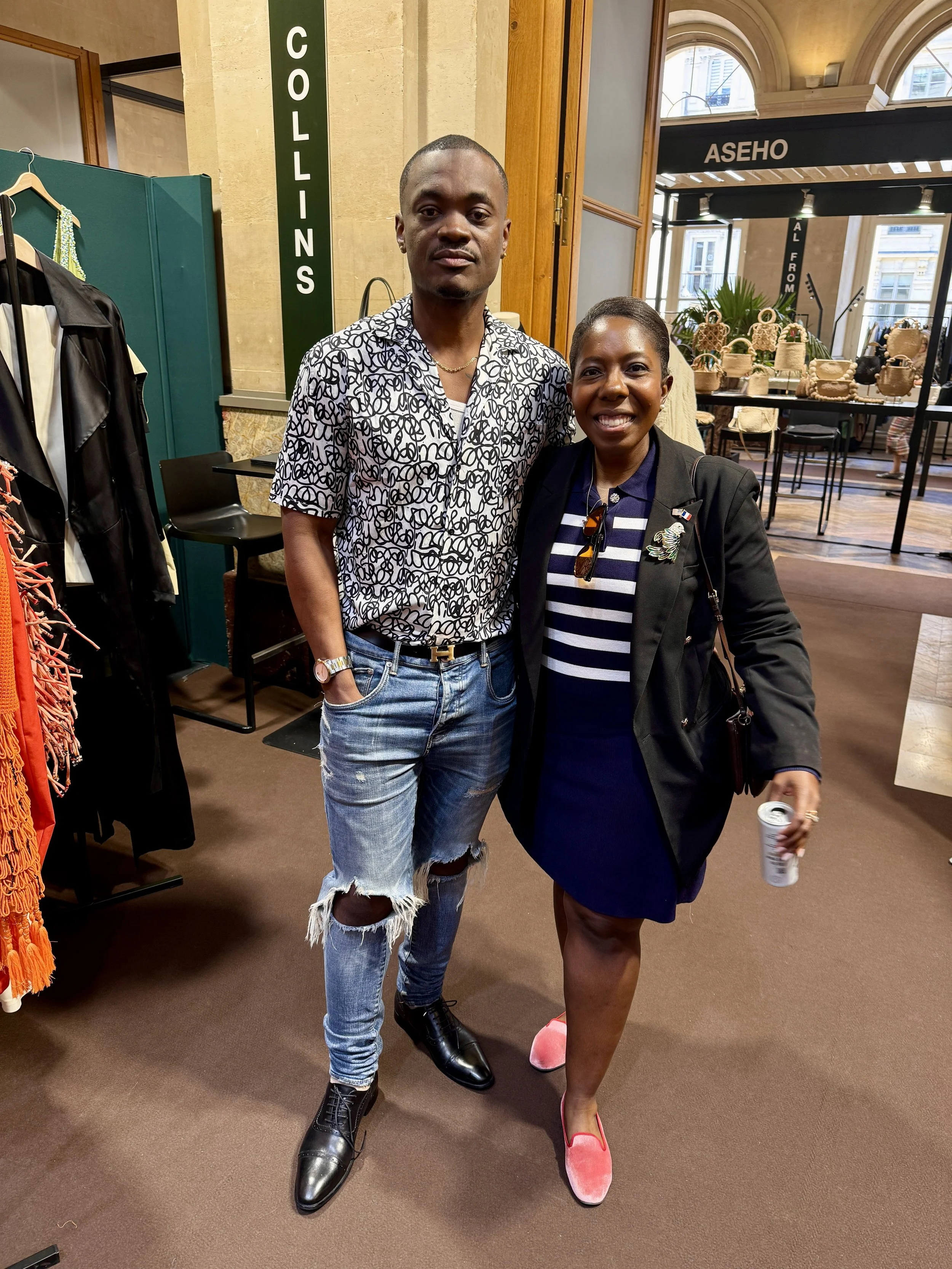
Designer Chuks Collins with Seele Editor-In-Chief Ally Portee | Photo Credit: Seele
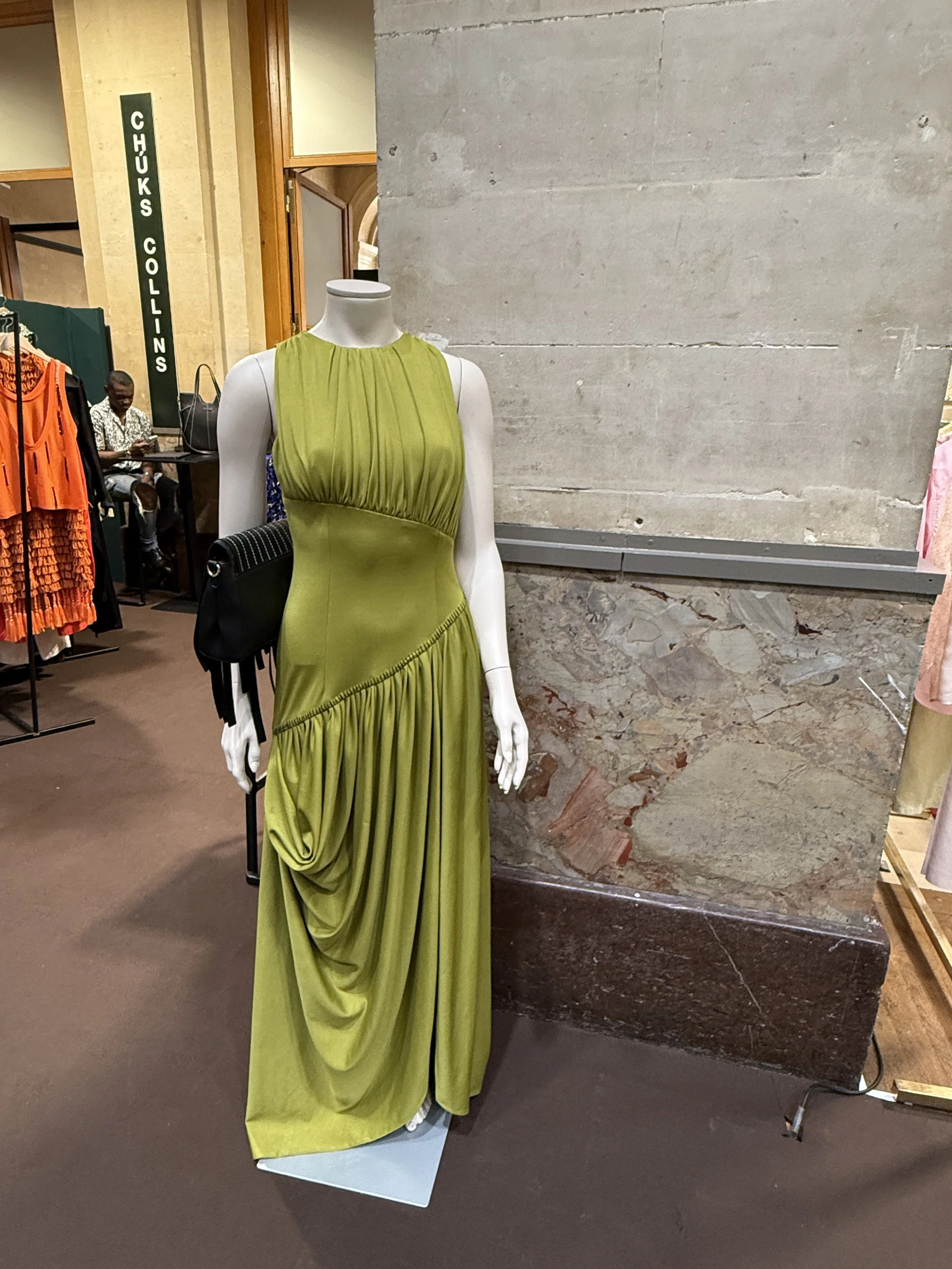
A look from the CHUKS COLLINS SS27 collection that premiered during New York Fashion Week | Photo Credit: Seele
One designer, Nigerian-American Chuks Collins is known for his couture sensibilities in his ready-to-wear silhouettes. Having dressed well-known American celebrities from Quincy, to Michael James Scott, Kerry Washington, The Jonas brothers, Trevor Jackson and many others, Collins is used to global audiences. But being in Paris with Canex and Afreximbank has allowed him to meet with buyers in other markets. Bringing his SS27 collection that premiered at New York Fashion Week, people that stopped by his booth were in awe of the fabrics he chose for the collection and hints of Africa.
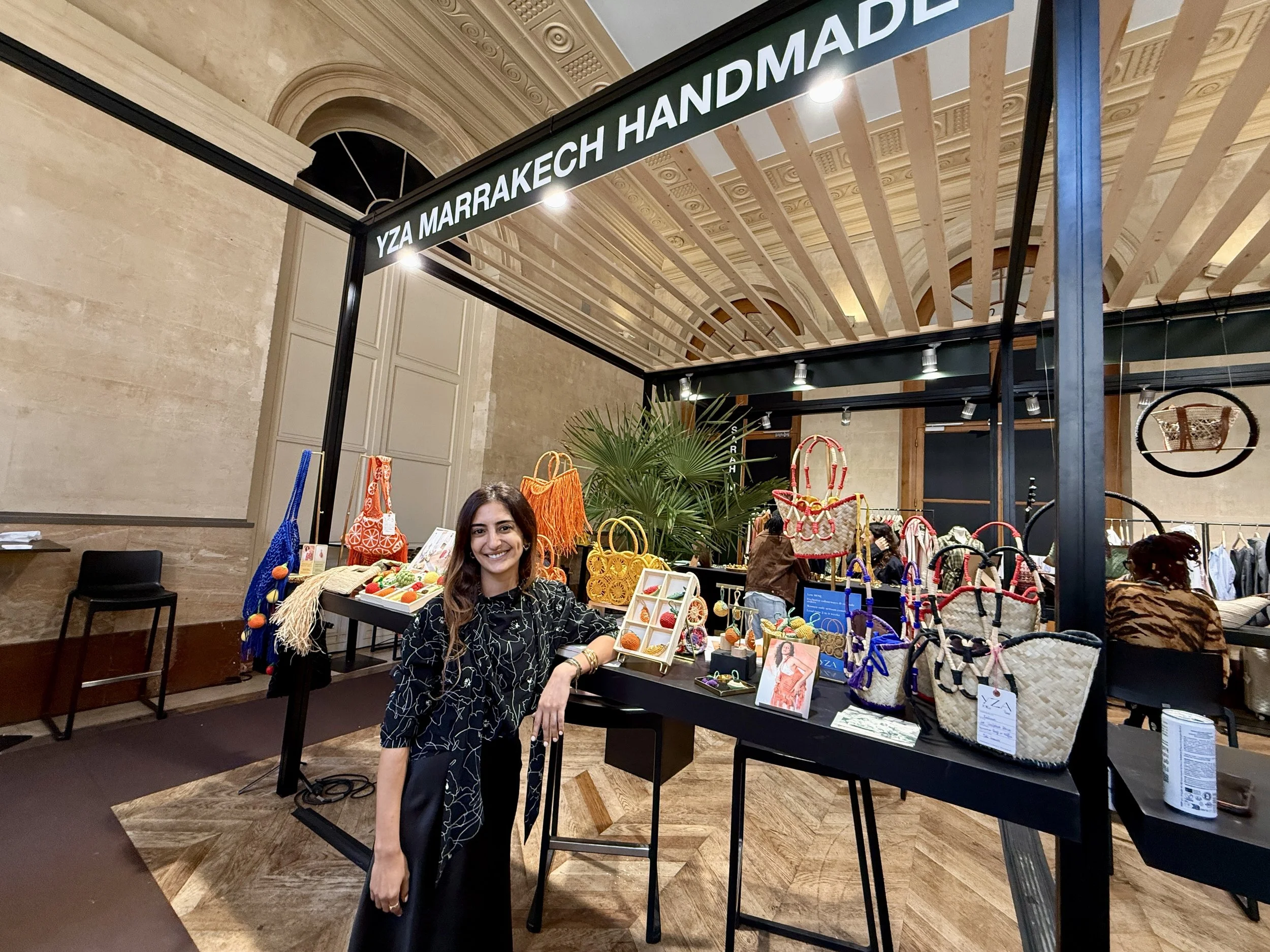
Moroccan designer Nawal Rmili and founder of YZA Morocco | Photo Credit: Seele
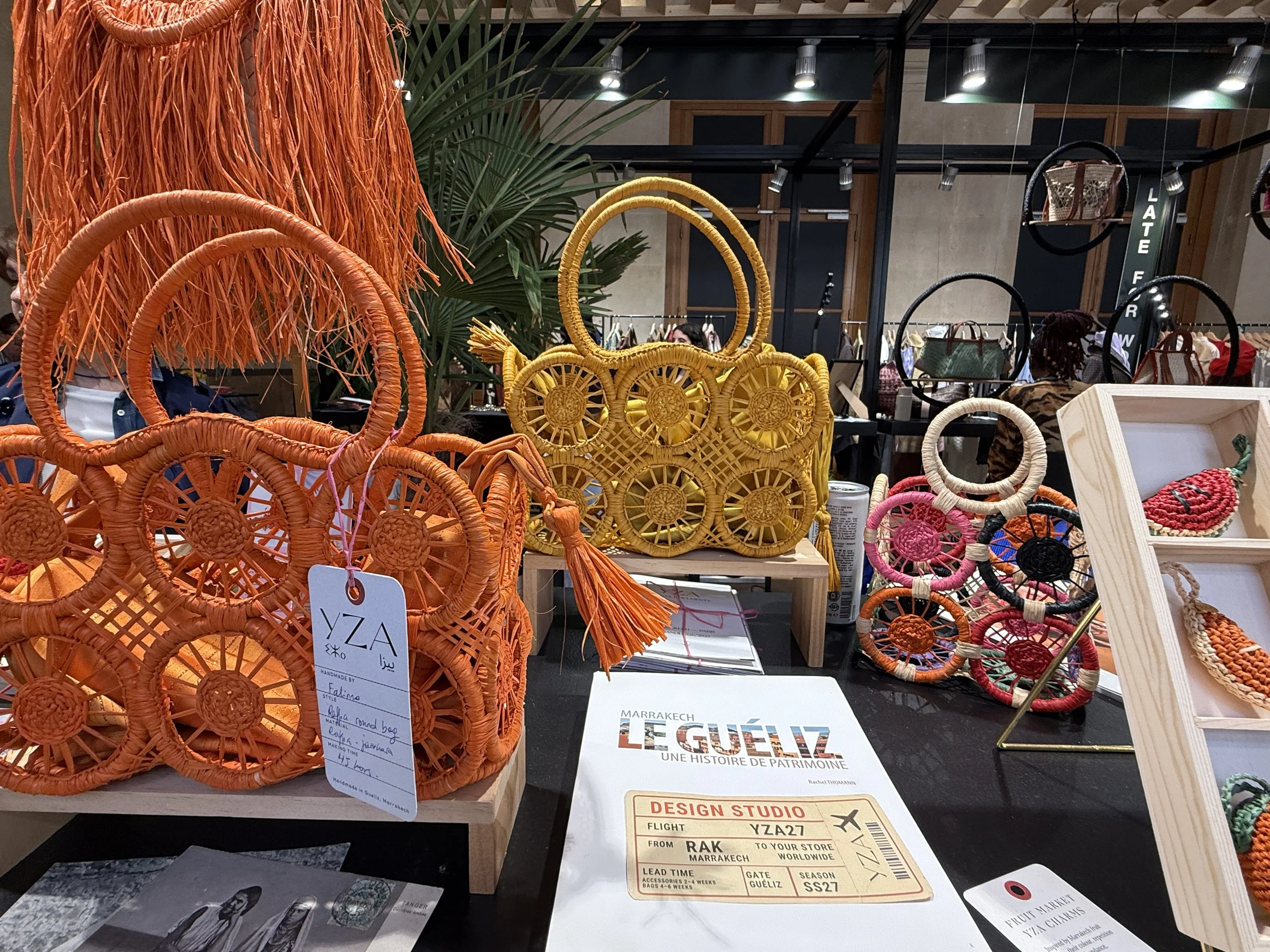
Handbags are made with raffia and intricate Moroccan craftsmanship | Photo Credit: Seele
YZA Morocco is a Marrakech born brand by Nawal Rmili. Run by a woman with a women-only team, YZA creates resort inspired accessories. Taking Moroccan craftsmanship, bags are created with the highest handmade techniques with crocheting with materials like raffia. Hands versus machines is their mantra. Inspiration from the handbags is inspired by their town of Guéliz but creating pieces that don’t look cliché. Modern looking and local is the brand’s aim.
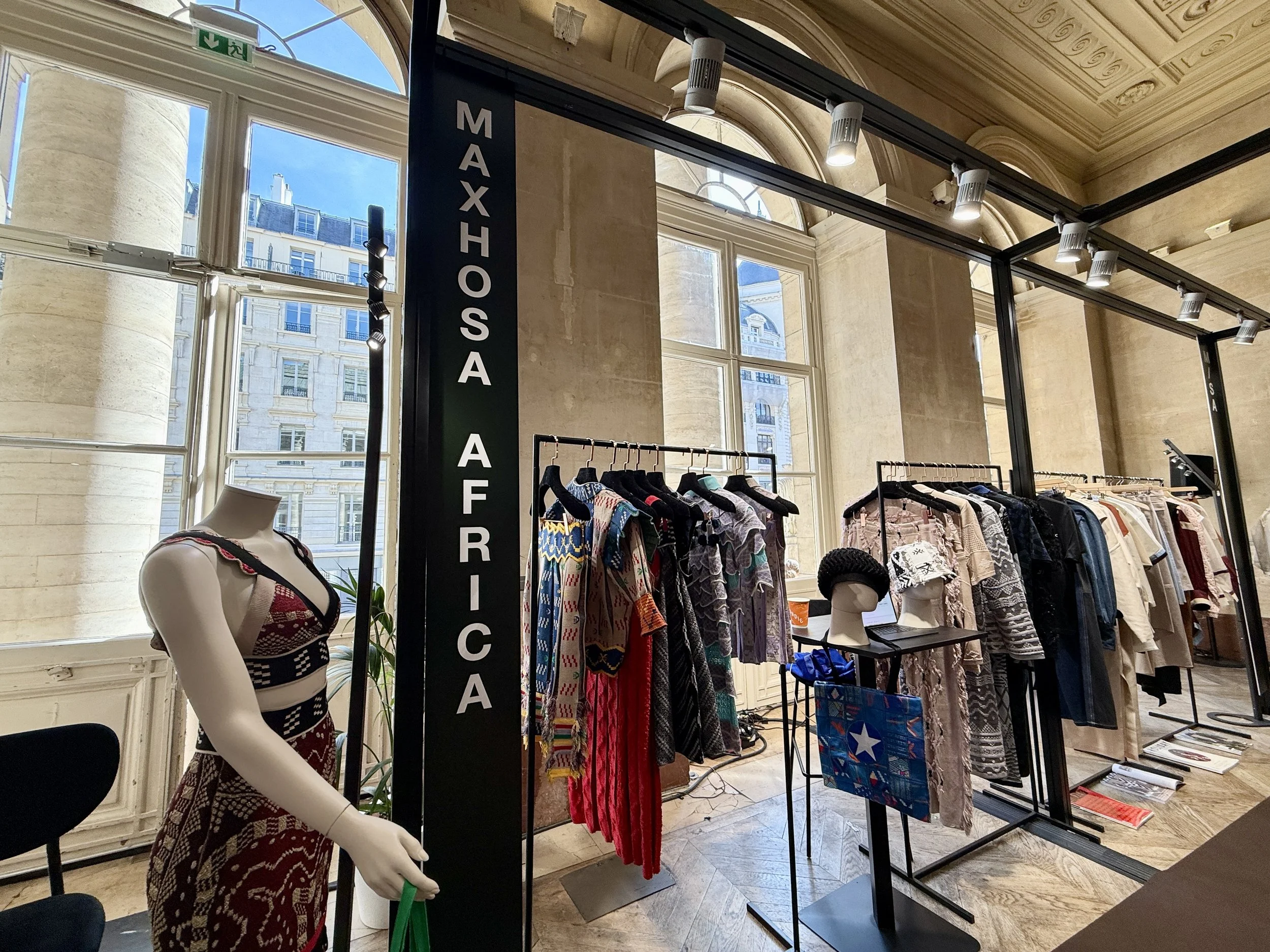
Maxhosa Africa was birthed out of its founder’s desire for South Africans and Africans to wear African made luxury fashion | Photo Credit: Seele
Maxhosa Africa is the only African brand that showed on the official Paris Fashion Week calendar this season. A luxury brand by Laduma Ngxokolo from South Africa, it was important for him to create a brand that is African made for Africans. Looks are colorful, vibrant with designs, and Africa proud.
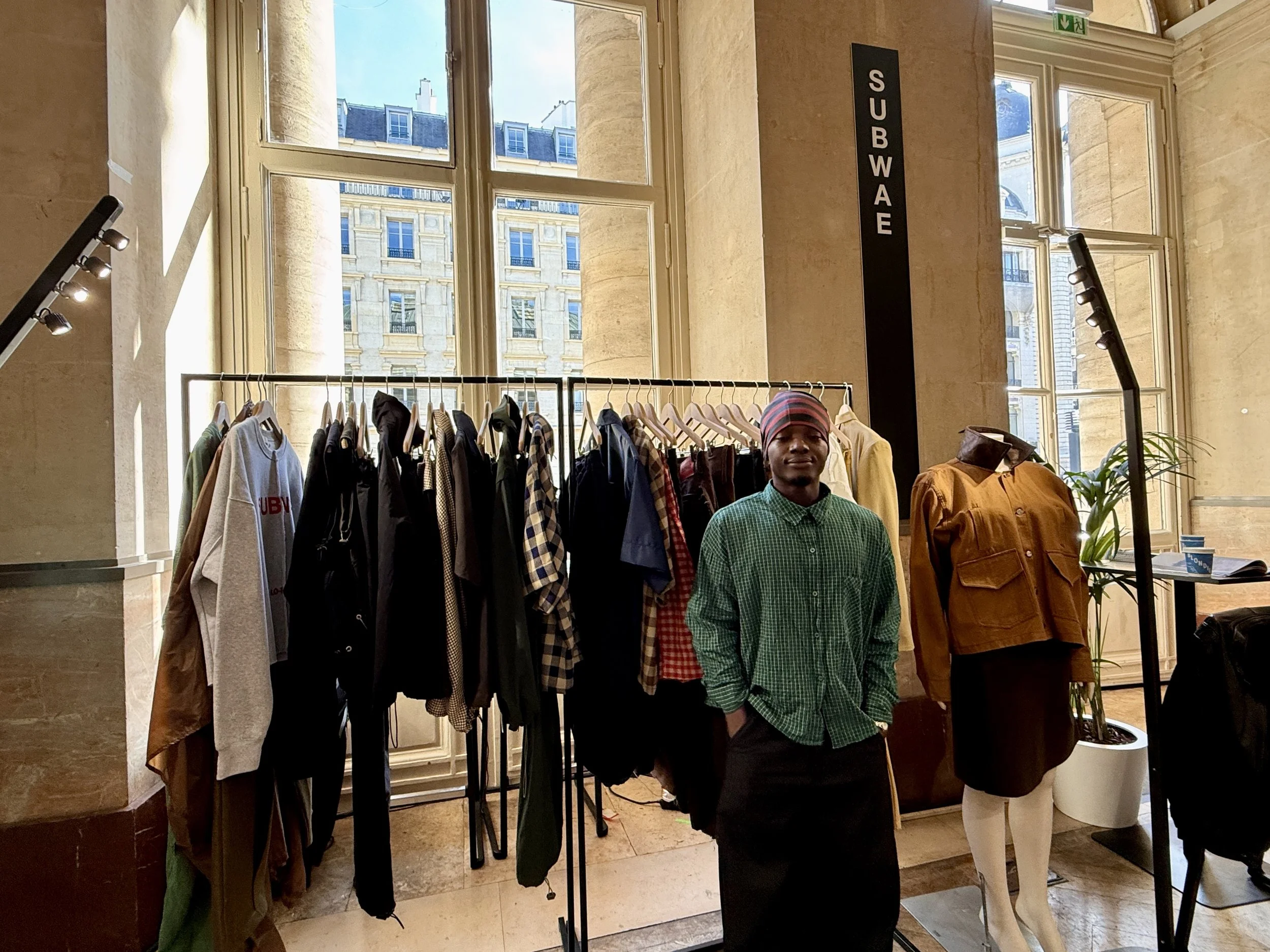
Christopher Akpo, founder of Subwae | Photo Credit: Seele
Subwae, founded by Christopher Akpo from Ghana, it’s elevated streetwear. The brand’s acronym stands for: Storytelling Unisex Brand With Aesthetic Evolution. Fabrics and materials are sourced in Ghana. They’re also produced in Ghana with a eco-friendly mission.
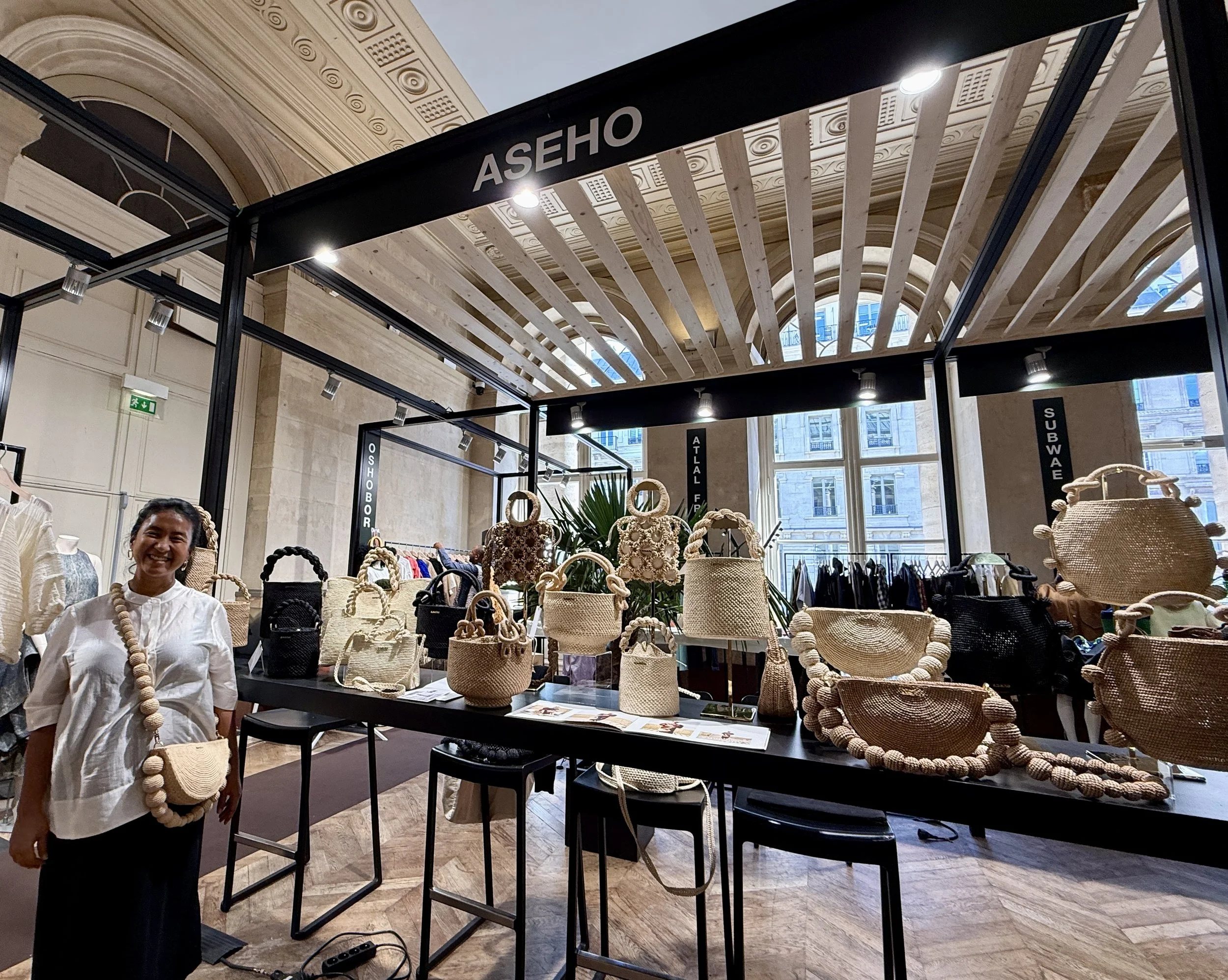
Andrianina Randria, founder of Aseho | Photo Credit: Seele
Aseho from Madagascar is a unique handbag brand, inspired by ancient braiding techniques that women in their island nation still do today. 80% of the world’s raffia comes from Madagascar, explains Andrianina Randria, the brand’s founder. Bags are created in the most unique of shapes, standing out from what’s the norm on the market.
Dathonga from Mozambique, by Marcia Nangy O’Connell uses ancestral and traditional techniques in their weaving, giving a unique style to accessories. Birthed with the intent to keep Bantu identity alive and real for the African continent, products like palm, wild creepers, wood, and glass are sourced locally.
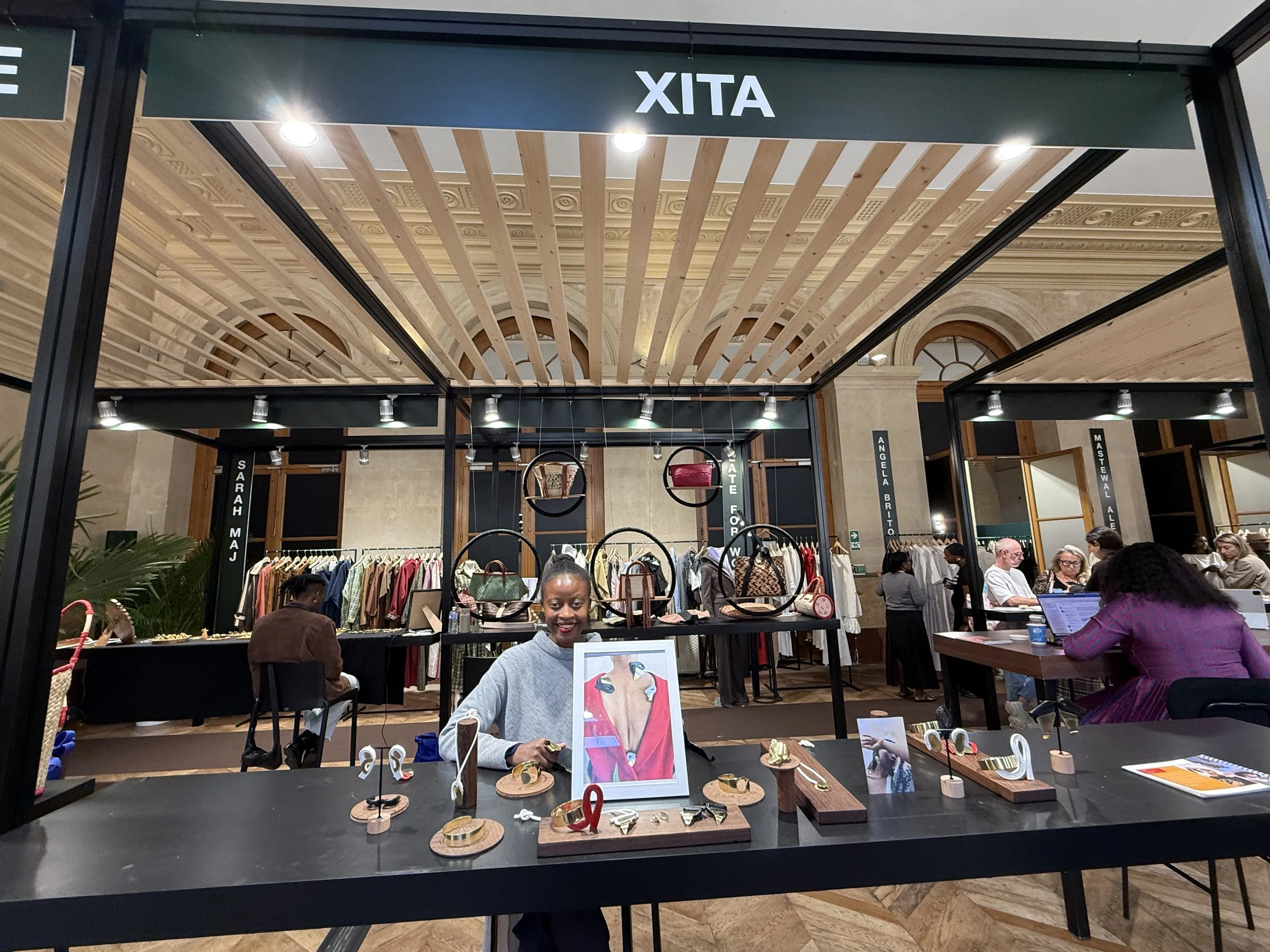
Xita founder, One Rapelana | Photo Credit: Seele
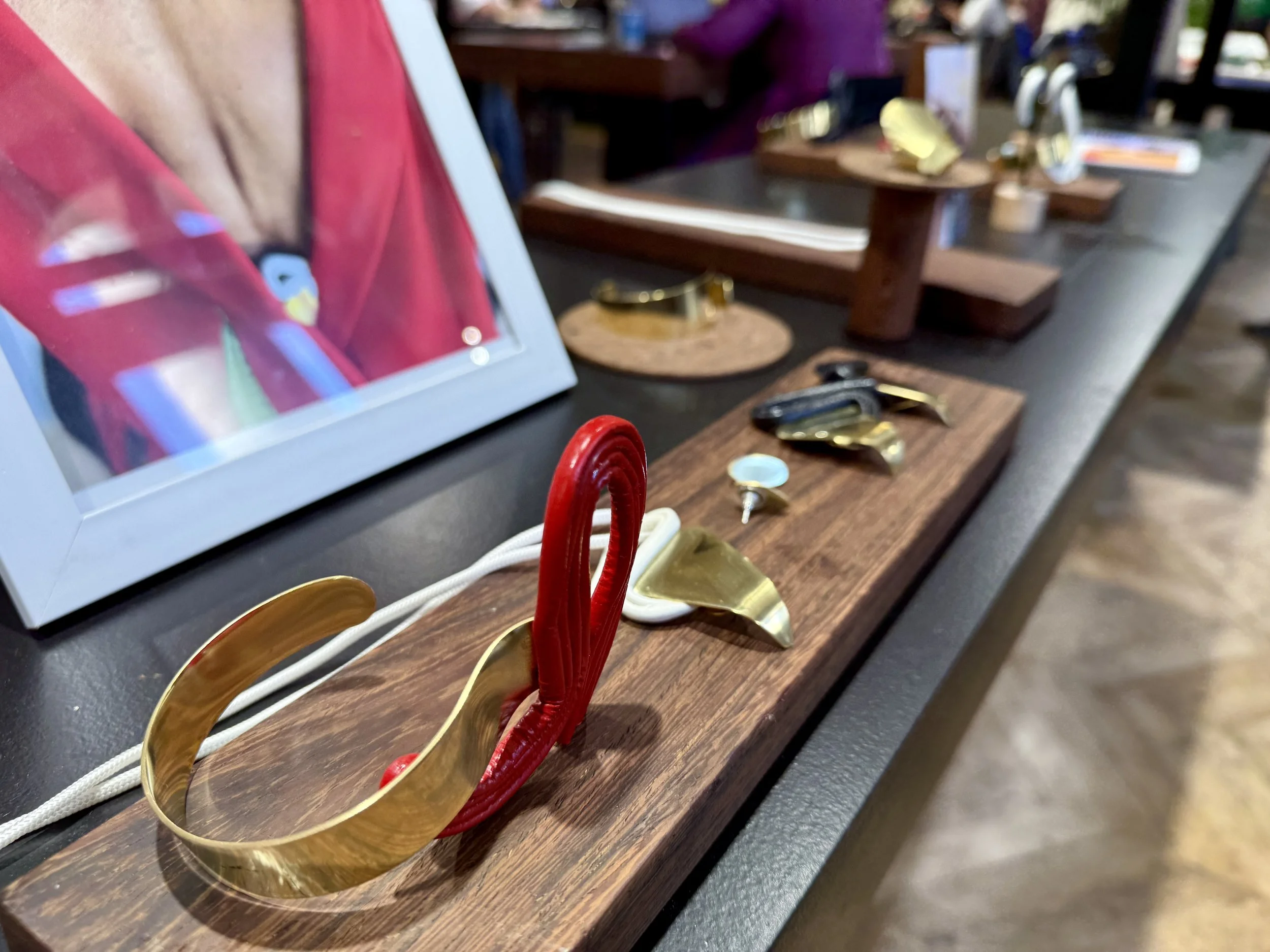
Jewelry is made from repurposed materials | Photo Credit: Seele
Xita from Botswana, by One Rapelana started off as a personal hobby and was birthed into a thriving jewelry brand. Pieces are made with intent and celebrate the boldness of the wearer. Using unused t-shirt fabric, faux leather, and brass in her pieces, gives the brand a sustainable and ethical nod.
All these designers are seen by the Creative Africa Nexus program as fuel for the creative economy, and they want to help designers reach their full potential. The program is aimed to help facilitate and grow creative and cultural industries in Africa and the diaspora.
According to stats from Canex and Afreximbank, fashion’s global market value is estimated at $1.3 trillion, and is expected to double in the next decade. The combined clothing and footwear market in Africa, not including north Africa is estimated to be worth $31 billion. So Afreximbank wants to partake in the opportunity to increase and improve the upstream value help the integration of African fashion design globally, by way of manufacturing.
Together with Afreximbank, who strategically partners with The African Union, African governments, and other entities on the continent, Canex aims to help creators like the twenty at Tranoï get access to investment and help them with export grad production. They also advocate for IP rights for designers, and help facilitate partnerships, which sets designers up for even better success.
TRENDING

Therapist warns asking AI one question after an argument could sabotage your relationship…