
Craftsmanship, The Real Luxury?
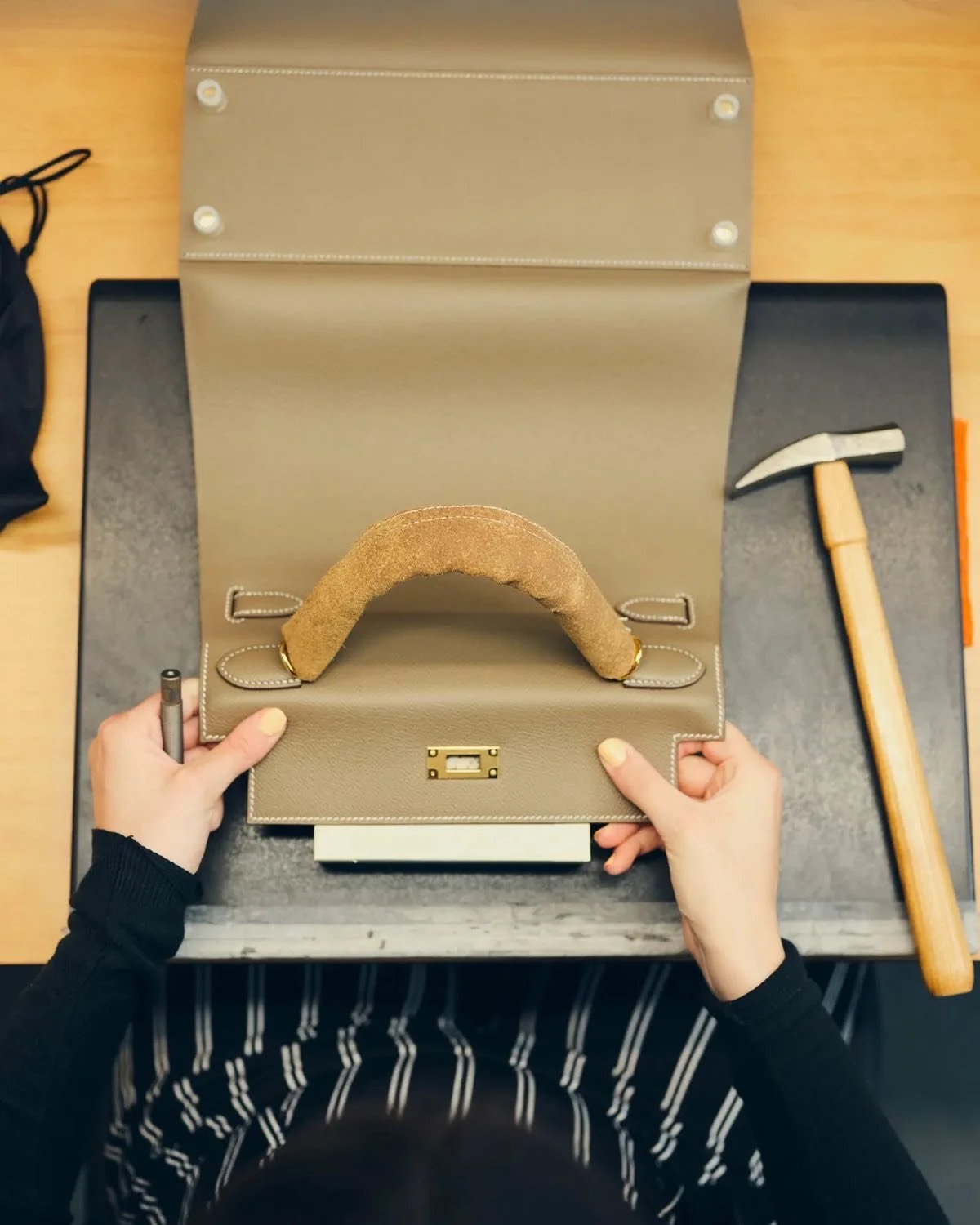
Jade Toko unpacks what makes authentic luxury
When boundaries are increasingly blurred, humankind is seeking structure: romantically, financially, socially.
Over the past decade, the luxury fashion industry has suffered a depreciation in perception, driven by the rise of fast fashion, the exposure of ethical wrongdoing, and the breakdown of the real cost of items.
Beyond an economic slowdown, the industry is facing a symbolic crisis where value has been lost through major changes in production models and consumerism patterns.
Today, luxury fashion market actors most distinguish themselves through customer experience, and craftsmanship stands as one of the fundamental keys to return to.
What is craftsmanship?
According to the Oxford Dictionary: “the quality of design and work shown in something made by hand; artistry.”
It is rooted in time, precision, intention, and transmission.
It can also be traced back to prior to the 19th century, when every single piece of clothing owned was made on demand or by a dear mother. No one had the exact same piece of clothing, and garments were used to “tell” who we were, socially and economically; nobles were wearing brocade jackets tailored to accommodate their sword, while less fortunate people were wearing second-hand clothes.
With the evolution of time and the Industrial Revolution, clothing got accessible through the mechanization of production, the creation of new, cheaper, textiles, and the massification of distribution, and craftsmanship slowly dissolved.
Fast forward to the 2000s: the rise of social media standardized taste and blurred the lines between socio-economic classes.
This leads to today’s market state where consumers are not moved by clothing anymore and are shifting their interest in luxury trips and exclusive wellness stays.
Luxury personal goods sales have stagnated while experiential luxury categories such as travel and wellness continue to grow, illustrating a broad consumer shift from owning objects to investing in experiences. According to Euromonitor, 55% of high-income consumers now prefer spending on experiences rather than goods. A clear indication that emotional resonance and lifestyle integration are redefining what “luxury” means today.
More than ever aware of their consumption behavior, consumers are increasingly connected to themselves. Yet, aren’t these the very emotions luxury fashion brands want to evoke in consumers? Uniqueness, exclusivity.
The return of craftsmanship
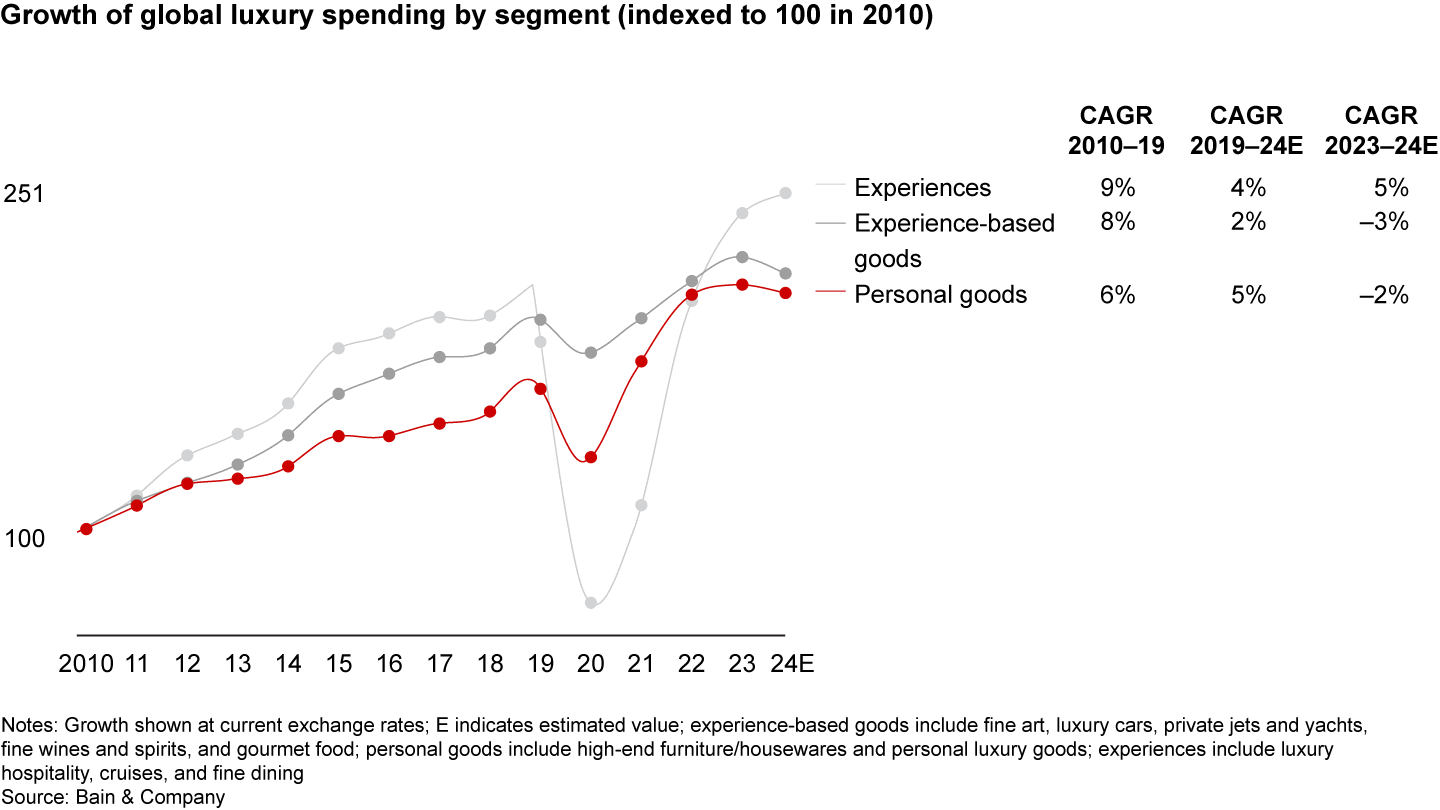
Showing how luxury consumers continued to shift their spending toward experiences, which grew faster than good | Image from Bain & Company’s Bain-Altagamma Luxury Goods Worldwide Market Study forecast
In 2026, as some luxury brands share the same manufacturers as fast fashion brands, customer trust is challenged, uniqueness fades away, and consumption decreases.
But how can brands get consumers back?
This is where craftsmanship takes its rightful place.
By creating goods that take their source in artistry, research, history, and purpose.
Globally, craftsmanship disappears in all industries, but specifically in fashion we can name several workforces that are lacking hands: tanning, dames d’atelier, crimpers, etc.
The urgency of preserving endangered métiers and craftsmanship transmission has been formally highlighted through major institutional initiatives such as Les Deux Mains du Luxe at the Grand Palais in Paris, dedicated to showcasing artisanal savoir-faire and the fragility of manual excellence in luxury.
And so, producing exclusive items puts brands on an upper scale and increases their perceived value.
With the fast-growing expansion of AI, every job is at stake and everything will go faster: food production, music, cinema, gardening, and clothing.
Will it be exclusive to wear a bag made in 20 minutes by a robot? We can agree: no!
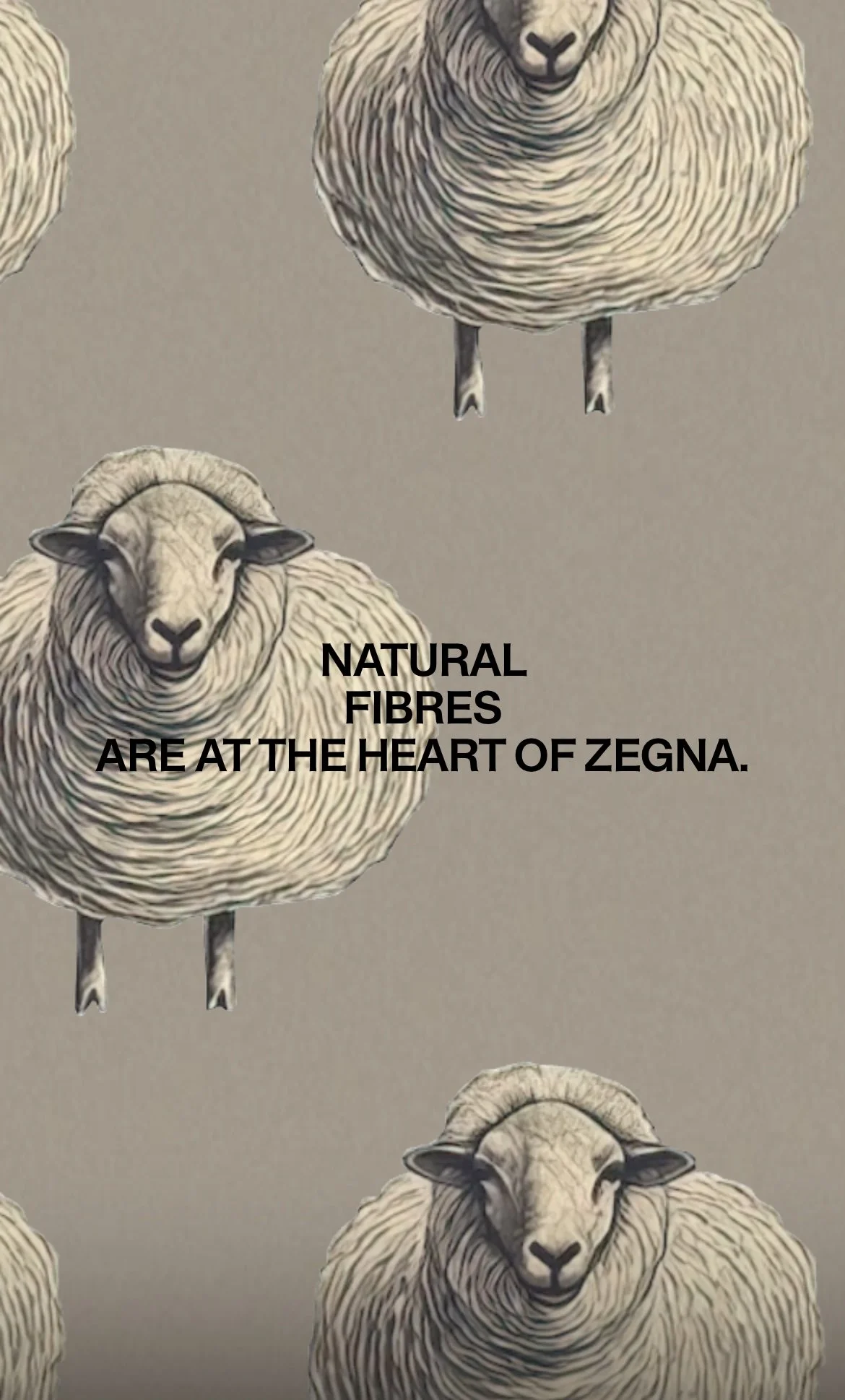
Photo Credit: Zegna
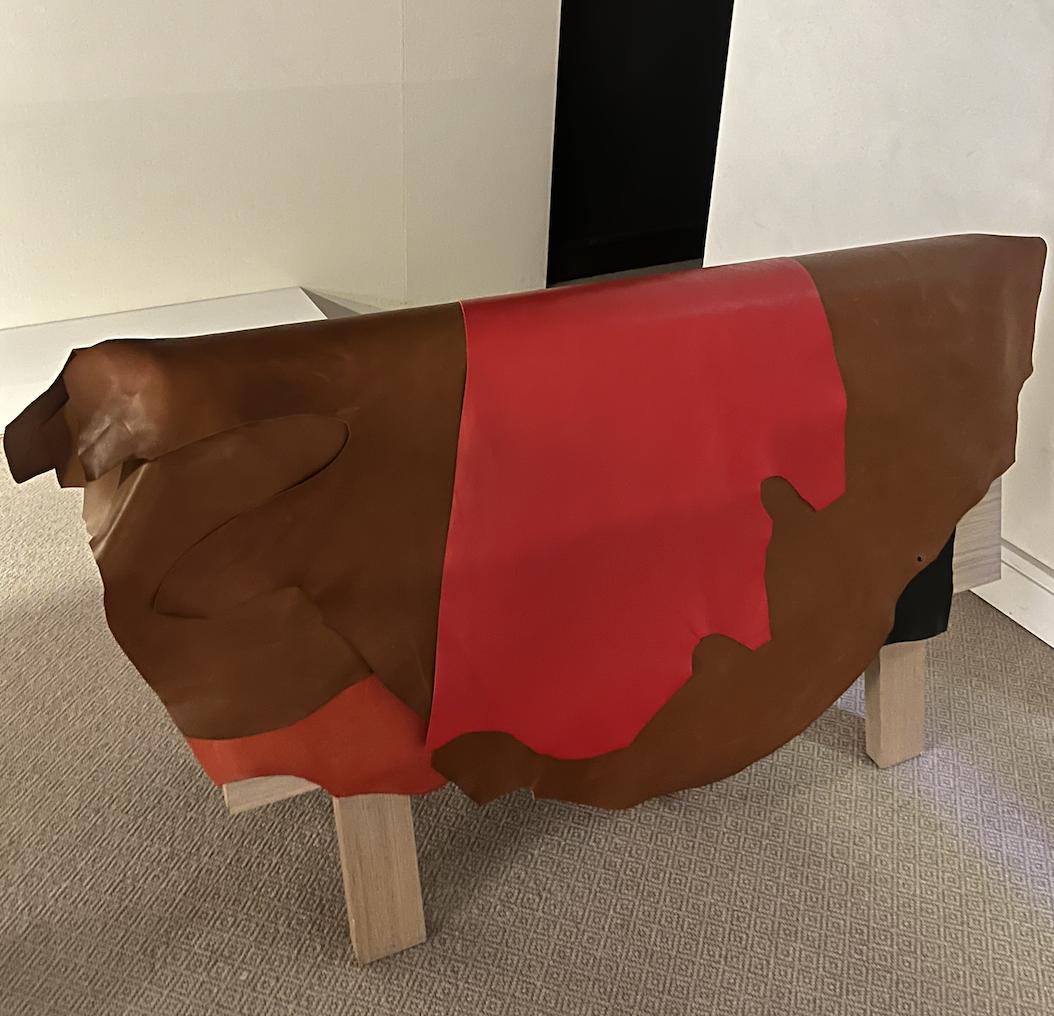
Photo Credit: Jade Toko
As a result, crafting exclusive items elevates brands to a higher symbolic level and increases perceived value, not only through rarity, but through intention, time, and authenticity.
Human imperfection will become the rarest gem in a world of perfect duplicity.
Several brands have preserved this DNA, like Zegna, with their own fabrics production, or Maison Joseph Duclos, which works exclusively with French manufacturers that make their bags by hand, demonstrating that craftsmanship is not a narrative, but a commitment.
It also allows brands to share values with customers: activations are endless when storytelling is rooted in truth and care.
In this very competitive industry, price is no longer an argument; it accompanies the story.
TRENDING
From statement lobbies to story-driven design, a new generation of hotels is turning a night away into something worth remembering.