
Litkovska Spring 2027: Where the Seams Show
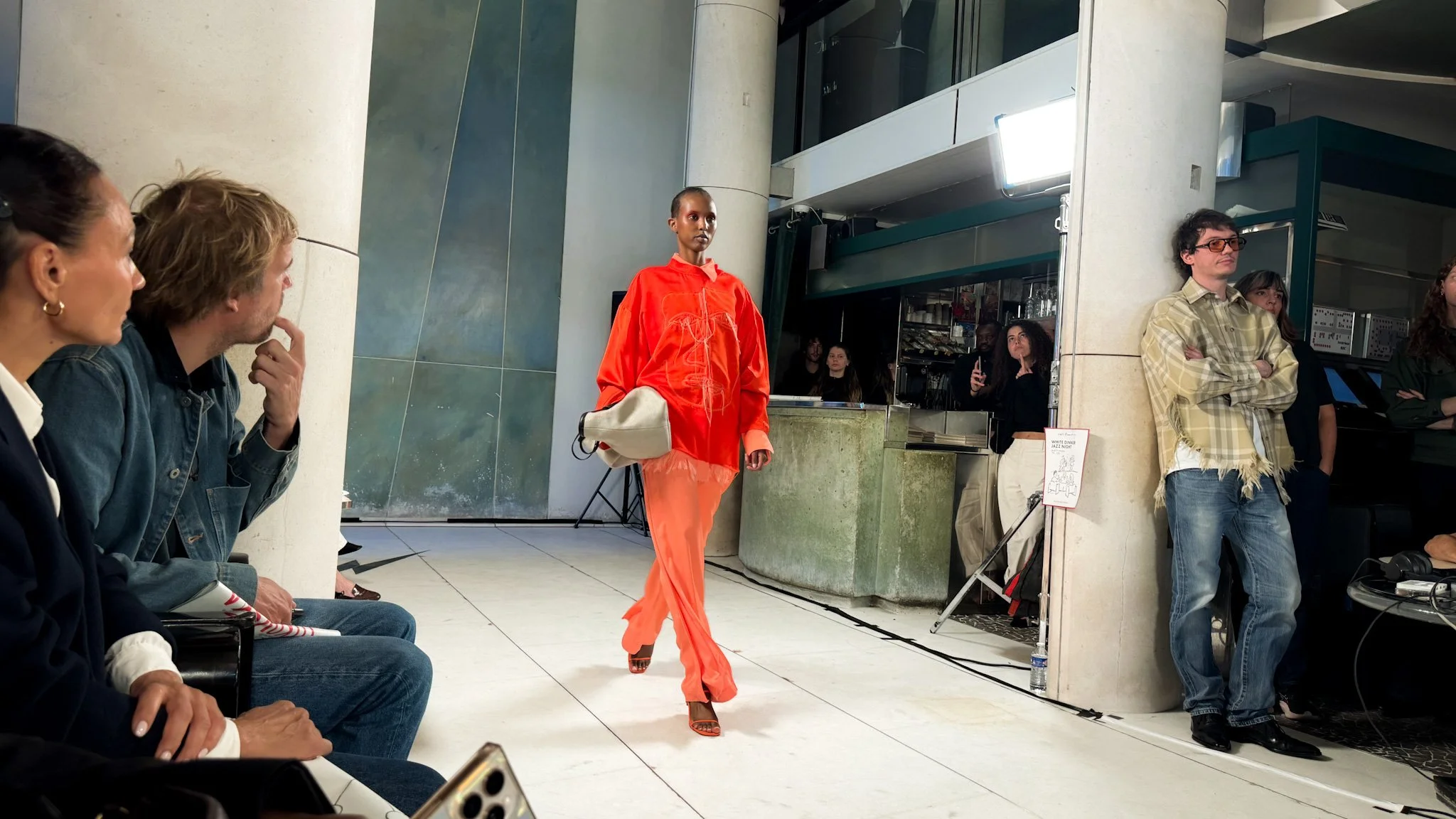
LITKOVSKA’s STRICHA and the soul inside the seams of the Spring/Summer 2027 collection…
“Who knew espresso would intersect the encounter of fashion and finding beauty amid the ashes of war?”
Liliia Litkovska did, and as the fourth generation of a family of tailors, Litkovska chose Café Beaubourg, across from the Centre Pompidou in Paris, for the setting of the Litkovska Spring/Summer 2027 collection. A place long associated with artists, writers, and the exchange of ideas, the café was fitting for a collection rooted in her home country of Ukraine and the creativity that continues to emerge from it amid the destruction today.
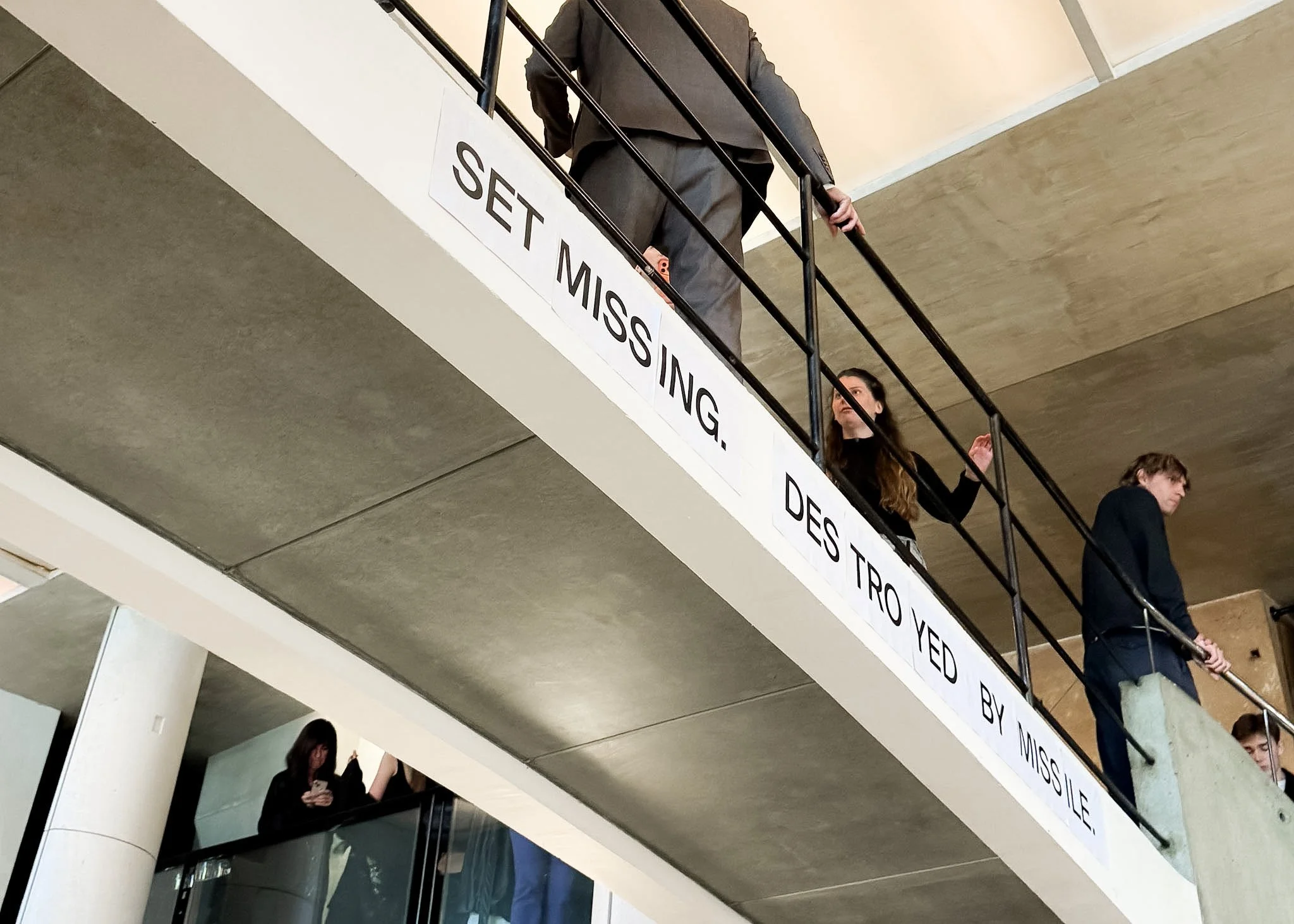
As we stepped inside the café, the set felt almost bare, yet still brought to life by the people gathered and the espresso being served. On the balcony railing were the words, “SET MISSING. DESTROYED BY MISSILE.” At that moment, it was difficult not to think of the destruction of war in Ukraine. Liliia Litkovska has a gift of continuing to create even in the face of destruction, transforming what is familiar into something new while leaving its history visible. Even when the world around her would rather go quiet, she invites us to sit with the moment and see what can still be made from it.
The collection is called STRICHA. In one of Ukraine’s dialects, the word means an encounter. A meeting. A glance. A connection. Liliia built the collection around this idea as she explored what happens when we meet one another, and perhaps more importantly, when we meet ourselves.
Café Beaubourg fell into stillness as Pasha Harulia, singer and model, sang in a cream satin co-ord. Wearing one of the pieces from the collection, an oversized sweatshirt with dropped shoulders and a relaxed fit was paired with fluid matching trousers. Across the front, a large abstract face was outlined in raised tonal stitching, while loose threads hanging from the sides introduced an unfinished detail to the otherwise fluid silhouette. Holding a microphone close, Harulia turned toward the balconies as Dmytro Novichenko played alongside her. The room grew quiet, and for a moment, the clothes became part of something beyond the runway itself.
Faces appeared consistently throughout the collection, illustrated in lines of eyes, noses, and mouths, stitched across coral silk, printed onto a white T-shirt, and embroidered in pale thread against black. The imagery drew from the collage portraits and masks of Borys Kosarev, a founding figure of the Ukrainian avant-garde, whose work fragmented faces and forms into geometric planes. Rather than simply illustrating Kosarev’s work, Litkovska brought his method into the construction of the garments, translating those fragmented faces into appliqué, collages and prints. Through STRICHA, his vision arrived in Paris while creating the encounter between his work and a city that never took place in his lifetime.
One look in red was gathered around the model’s head like a hood, cords cinched at the knees, layers falling toward the floor. It looked like something holding itself together.
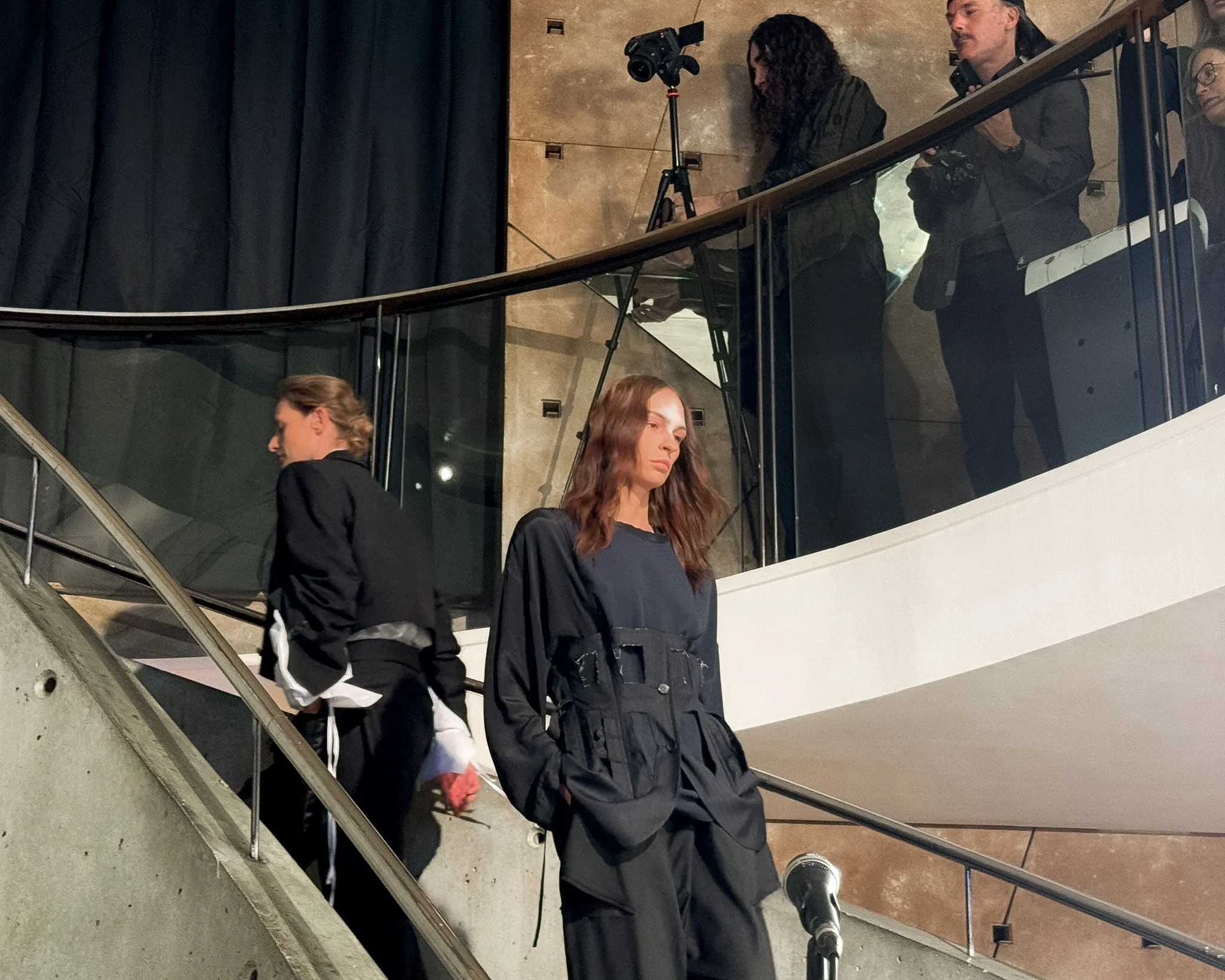
The collection’s construction was deliberately left visible, with seams highlighted rather than hidden from a voluminous blouse unfolding into a long dress before the eyes, while a cape became a coat when you least expected it. Another look was made from traditional Ukrainian homespun weave, turned inside out so that the inner side became the surface. Loose loops, open holes, and hanging threads brought what would ordinarily remain hidden into view, with no attempt to conceal the imperfections or smooth away what had been left unfinished. Instead, the construction itself became part of the design, reminding us of the idea at the heart of STRICHA: there is no wrong side.
I brought a verse into that room with me. Paul writes in his second letter to the Corinthians that we can be “struck down, but not destroyed.” I read those words, and then I looked up at the railing. DESTROYED BY MISSILE.
A few lines later, Paul writes, “Though outwardly we are wasting away, yet inwardly we are being renewed day by day.” That is what this collection made me ponder on, what we might be tempted to conceal is not always what needs to be corrected. Sometimes, what we consider imperfect becomes part of the story itself!
Throughout STRICHA, the faces of a Ukrainian artist found their way through Paris, carried across the collection in lines, prints, and embroidery. And in the middle of it all, we were invited to encounter something beyond what we could see. In the face of destruction, what is essential can become clearer: what belongs to us, what we believe in, and what is worth carrying forward.
Liliia described the collection this way:
“This is a show about encounters. We have thousands in a lifetime, but there is one that matters most — the encounter with yourself.”
Grief and beauty occupied the same room and while the collection held a kind of solemnity, it was not without life. The unfinished edges, the visible seams, the fabric turned inside out. They made me think about the parts of ourselves we spend so much time trying to conceal, and what might happen if we allowed them to be seen. Perhaps there is something to be found in allowing the hidden parts to surface, not because the brokenness disappears, but because it was never the whole story. Is fashion just fashion if it doesn’t have a sense of soul?
STRICHA has a soul. You can see it in the seams.
TRENDING

LITKOVSKA’s STRICHA and the soul inside the seams of the Spring/Summer 2027 collection.