These 10 UK Cities are Most Exposed to Cancer-Related Risks, Study Shows
According to a February 2026 report on UK cities where residents are prone to cancer, Liverpool shows the highest concentration of health risks that can increase cancer likelihood. The study by UK thoracic surgeon Marco Scarci explored lifestyle and environmental factors in their connection to cancer development…
Findings
Liverpool is the city most prone to cancer, with rates of smoking and alcohol-related hospital stays driving the ranking.
Four cities with the highest cancer risks are located in the Northern part of the UK.
Nottingham is home to mental health struggles affecting 53.1% of adults, a factor that can influence cancer risk.
“Cancer risk is about a lot more than just the genes we’re born with; it’s also about the place we call home,” states a spokesperson for Dr. Marco Scari in notes. “Every day, the city around us shapes what we are exposed to. In places with heavy pollution, people are constantly breathing in chemicals that can damage their cells over time. Then we have lifestyle habits like smoking or heavy drinking, which can put a massive strain on the lungs and liver. At the end of the day, where we live can be just as important for our health as how we live.”
The report examined 30 cities using key factors linked to cancer risks. The study measured smoking rates among adults, alcohol-related hospital admissions per 100K residents, and drug misuse. Other factors that can connect to cancer include air pollution exposure, obesity rates, anxiety levels, and the percentage of adults with mental health conditions. The study weighted factors most closely tied to cancer, where higher scores indicate greater risk.
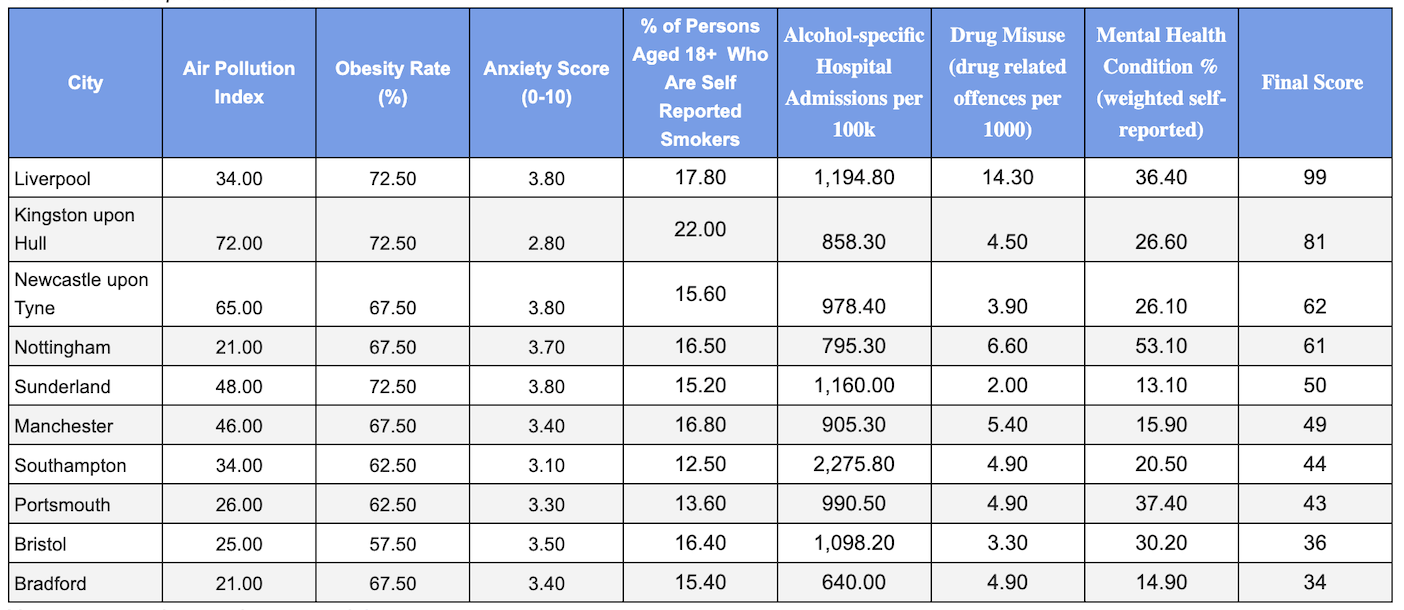
Table from the Marco Scarci study
Liverpool
· Air pollution index: 34
· Obesity rate: 72.5
· Anxiety score: 3.8
· % of Persons Aged 18+ Who Are Self-Reported: 17.8
· SmokersAlcohol-specific Hospital Admissions per 100k: 1,194.8
· Drug Misuse (drug-related offences per 1000): 14.3
· Mental Health Condition % (weighted self-reported): 36.4
· Final Score: 99/100
Liverpool ranks as the UK city where residents are the most prone to cancer, and those risks are driven by multiple overlapping health and lifestyle factors. The city struggles with an obesity rate of 72.5%, the highest in the country, alongside people with alcohol related issues and smoking habits. Beyond physical health, Liverpool is home to 36.4% of residents living with mental health conditions, which can also be connected to cancer risk.
Kingston upon Hull
Kingston upon Hull comes second, marked by severe environmental and lifestyle cancer risks. The city has the worst air quality in the study, with the highest concentration of airborne toxins that can increase cancer risk. The 22% smoking rate also tops the rankings, creating a major and direct threat to long-term health.
Newcastle upon Tyne
Newcastle upon Tyne's cancer risk ranks third, worse than the average for cities in the study. A major factor is the air quality containing cancer-causing pollutants. When it comes to health issues, around 67% of the residents are struggling with obesity, and mental health conditions are widespread, too, affecting 26% of the population.
Nottingham
Nottingham ranks fourth among the most cancer-prone cities, with the highest rate of mental health struggles in the country. More than half (53.10%) of the population in the area is currently living with emotional distress, increasing other health risks. A local drug crisis adds to the disease risks, with Nottingham recording more drug-related issues than most cities in the report.
Sunderland
Sunderland ranks fifth, primarily due to high obesity and alcohol-related health issues. Obesity now affects nearly three out of every four people in the city, a trend similar to Liverpool and Hull. Beyond the over 1,100 alcohol-related hospital visits, the population is also dealing with mental health challenges. Anxiety levels have reached a study-high of 3.8, a condition of chronic stress that is directly linked to an increased risk of cancer in the community.
TRENDING