
Do Single Women Dress Better?
Style, autonomy, and the quiet economics of appearance
The Assumption: A Persistent Cultural Narrative
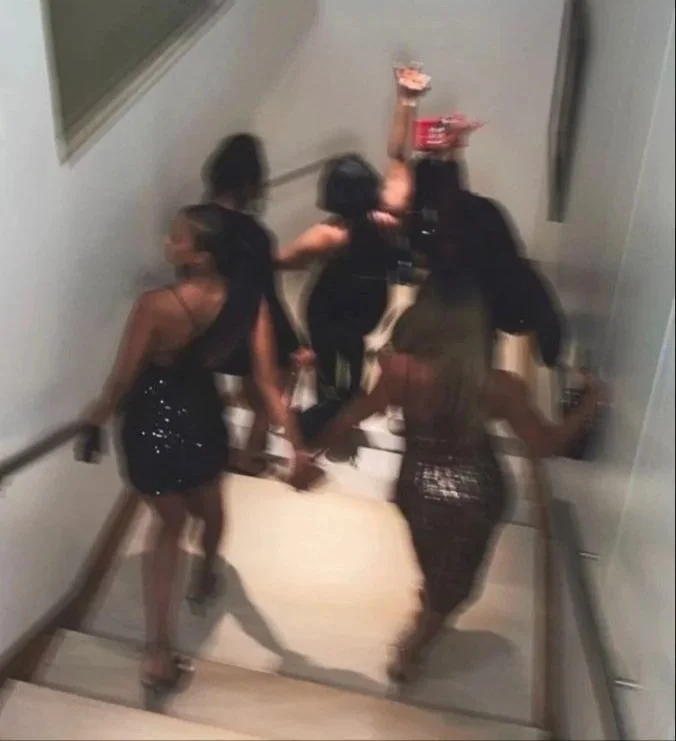
The idea that single women dress better is a familiar one. It circulates casually, reinforced by pop culture, dating narratives, and expectations around femininity and desirability. Well-dressed women are often read as more visible, more available, and more intentional, assumptions that say as much about social conditioning as they do about clothing itself.
Historically, women’s appearance has been closely tied to social value and romantic legitimacy. To dress well was not merely an aesthetic choice, but a form of signalling: status, respectability, and attraction. This legacy still informs how women’s wardrobes are interpreted today, particularly in relation to their relationship status.
However, equating style with seduction oversimplifies the role fashion plays in contemporary life. Clothing is as much about identity, function, and self-expression as it is about visibility. If the assumption persists, it is not because it is accurate, but because it is culturally convenient.
The real question isn’t whether single women dress better, it’s what actually shapes the way women dress at different stages of their lives.
Time, Money, and Personal Allocation
Statistically, single women allocate more resources to their appearance: beauty, clothing, activities, and self‑care. They also tend to have greater control over how they spend their time and income. Compared to men, women are consistently shown to spend more on appearance‑related goods, a pattern documented across consumer and OECD data on household consumption and personal care expenditure (OECD, Household Spending, 2022; Nielsen Global Consumer Reports).
Singlehood often increases budget flexibility and disposable time due to fewer domestic constraints. This matters in a context where women remain the primary contributors to household well‑being and unpaid domestic labor, even in dual‑income households (OECD, Time Use and Gender, 2021). When those constraints are reduced, resources are more easily redirected toward the self.
Brands have understood this dynamic perfectly. Women are the primary audience across most consumer categories, but premium and aspirational brands pay particular attention to urban, affluent consumer segments. Industry reports show that luxury consumption continues to evolve, with market growth linked to emerging consumer groups and changing spending patterns, including cultural and size preferences in womenswear and a growing role for younger, urban consumers (Bain & Company, Luxury Goods Worldwide Market Study; McKinsey & Company, The State of Fashion). Advertising strategies often frame consumption as empowerment, while subtly activating insecurities tied to beauty, success, and social validation.
At the same time, social expectations remain powerful. Supported by monotheistic religious narratives and reinforced through popular culture, Disney being a classic example, people are still encouraged to marry relatively young and have children as part of a “happily ever after” trajectory. In societies that materially privilege coupledom, this pressure is not only symbolic. In France, for instance, married couples benefit from more favorable tax arrangements, reinforcing the institutional value placed on partnership.
Within this framework, single women may consciously or unconsciously put their best foot forward in order to fit social norms that continue to equate legitimacy with visibility, stability, and relational success.
Yet style is not solely driven by hypothetical romantic outcomes. It is also a question of resource prioritization. Women’s relatively recent access to full economic participation means their perception of assets does not always align with long‑term capitalist timeframes. For centuries, beauty functioned as one of the few socially recognized resources available to women, a form of symbolic capital analyzed in sociology and literature (Beauvoir, The Second Sex; Bourdieu, Distinction).
The prioritization of appearance today cannot be separated from that historical legacy.
Relationship, Comfort, and Conformity
In relationships, clothing often shifts function, and styles get compromised: to please the other half, the lifestyle, the environment, the boss, the mom, even the dog. There is “always” a reason you can’t wear that tutu dress, and so it gets forgotten in the back of the closet, waiting for its turn that never seems to come. Fashion finds a comfortable zone that suits everyone’s expectations, the style is still there, but toned down; external validation pressure is reduced, and it becomes less demonstrative, more digestible. Elegance does not vanish in a relationship, it simply changes address.
And when it tries to assert itself, it may hit the same wall of expectation.
In The Devil Wears Prada, Andy gets her assistant job and is immediately consumed by it: it takes all her time and energy, and she begins to fit in and conform to the fashion world’s rules (yes, the boots are Chanel). Her boyfriend at the time feels threatened, saying he prefers her in her old clothes, how she seemed more “authentic” then.
But was she? Or was she simply meeting the expectations of her previous environment? And now that she is in the world of Runway magazine, where she thought the job was just to pay the bills, what does this new circle, and a pair of Jimmy Choos, reveal about her true self that she had been hiding?
The Real Question: Who Are Women Dressing For Today?
With the rise of self-gaze over the male gaze, seen in movements like South Korea’s 4B trend and social media phenomena such as “The Bear Over Men,” we might be tempted to think that women dress for other women, their peers, their personal taste, or even for bigger achievements.
In reality, single women do not necessarily dress better, they dress more visibly, more assertively, and with greater experimentation, perhaps simply because they only need to please themselves. Fashion, at its core, reflects freedom more than availability. It measures how free your mind is to express yourself on your own terms, whether in front of family, friends, or at work.
Being free here is the key.
Ultimately, the question is not whether single women dress better, but whether they give themselves the space to truly dress for themselves, to experiment, be seen, and define style on their own terms rather than anyone else’s expectations.
TRENDING

From statement lobbies to story-driven design, a new generation of hotels is turning a night away into something worth remembering.