
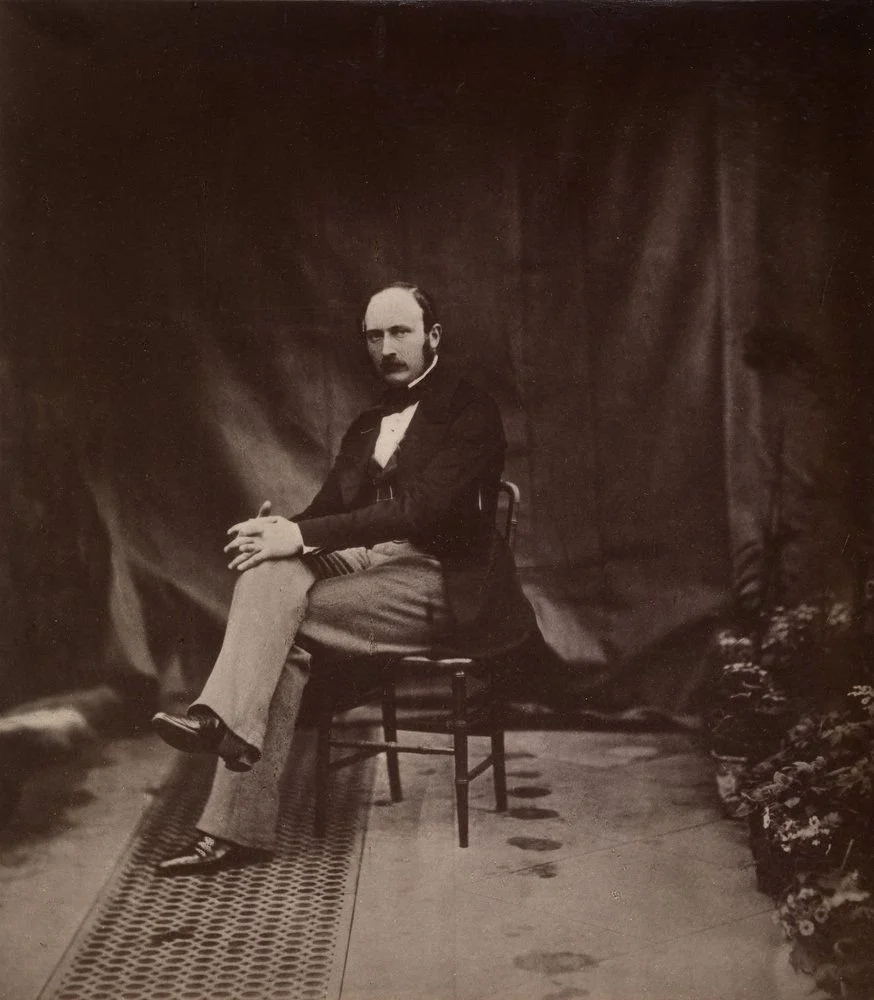
One of Briton’s most formidable royals, Prince Albert.
Many may not know of this man who died 164 years ago this month, but he impacted the world and his legacy is unlike any other. There is wisdom from his lifestyle, which greatly contributed to his death, where you and I can take away much, on what not to do
Just 11 days before Christmas in 1861, Prince Albert, the husband to Queen Victoria died. At the time doctors ruled his death to be from Typhoid fever- though no one at the palace had the fever at the time. Today, it’s believed that he died from sepsis, but I’d say Prince Albert died from other underlying factors that sparked sepsis, factors that you and I can learn from and apply to our own lives.
Known as England’s unofficial king, Prince Albert is the “king” that England never really had but benefitted from. He and Queen Victoria were first cousins and they were madly in love with one another. Albert had no mistress, something that men of his day and of his class were known for taking on. While the queen had her ways and borderline violent mood swings, she and Albert loved each other and he was devoted to her.
Albert came from Germany and was challenged with gastrointestinal issues, which plagued him throughout his life. It was common for him to have extreme bloating and flair ups with his stomach. He also suffered from catching colds often, anemia, toothaches, and fainting. It was also recorded that he was a hypochondriac, and he often ate too fast to make meetings. His workload, his health, and his lifestyle didn’t help the prince in regards to his health issues.
In addition, he had sadness from his own upbringing. Sexual dalliances were part of his parent’s marriage, which inevitably broke up their marriage. This marked Albert’s soul. He was determined to succeed in family life, where his parents had gotten things wrong. So, he took an invested interest in his 9 children with Queen Victoria, which impacted his psyche and stress levels.
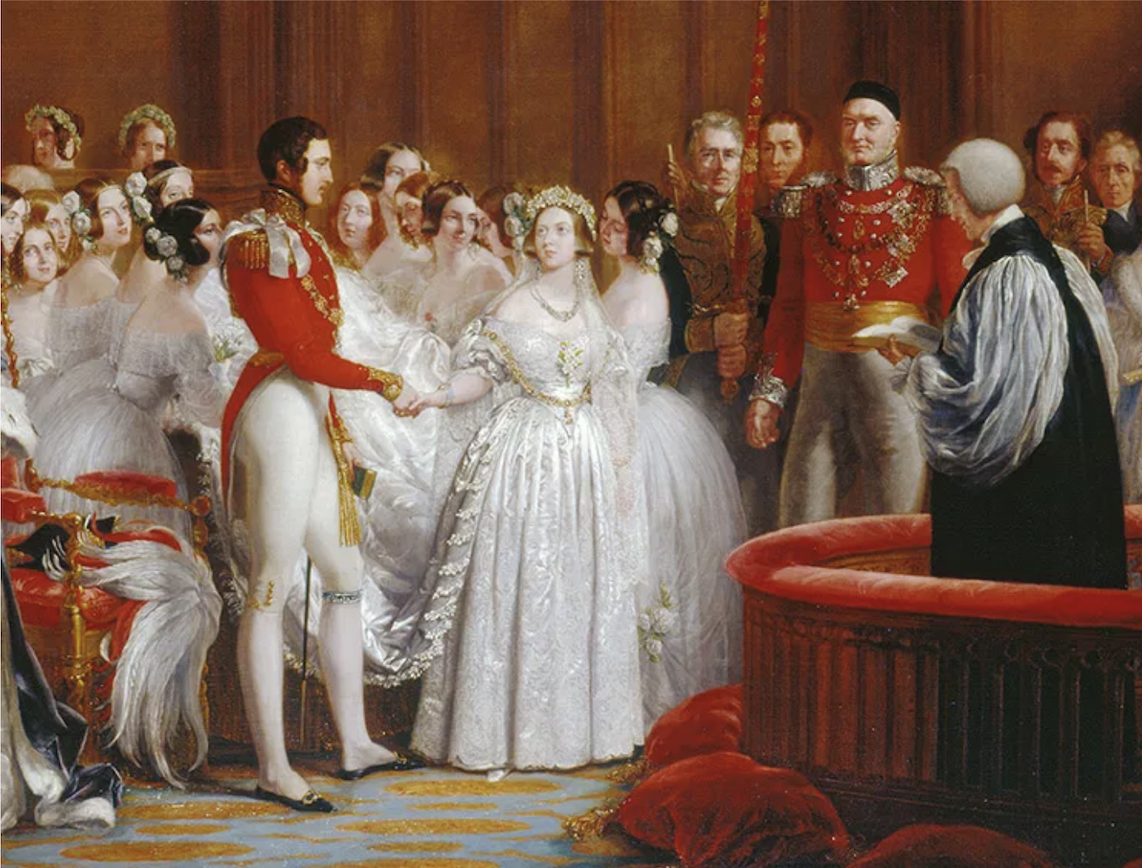
The wedding of Prince Albert and Queen Victoria in 1840
When he married Queen Victoria in 1840, Albert was not welcomed with an open heart by the British court and establishment. Sausage jokes were made at his expense, he was seen as foreign, he was not seen as a suitable consort for Queen Victoria. Quite simply he wasn’t not liked, which propelled Albert to work harder. It’s unfortunate how those in the minority often have to work harder than those who are accepted, and work hard Albert did.
To his own detriment, Prince Albert threw himself into his work, taking on patronages, advocating for causes like the abolition of American slavery, modernizing Buckingham Palace, being in the details of the building of Osborne House, taking on the planning of every detail of the Great Exhibition of 1851, getting behind the latest technological advancements, and much more. He was an innovator, modernizer, advocate, and visionaire.
On top of this, Victoria relied heavily on Albert. In the maturity of their marriage, he was in effect running things. Some could even see it as him being the de facto king. And while he and Victoria had a loving marriage, and she was attentive to him (more than their children), she was not always understanding to his bouts with health. The queen took a stricter view of health, not coddling him, often not sympathetic, and on top of this, she had ravaging and unpredictable moods.
It is recorded in history that Queen Victoria was notorious for not liking heat. She kept palaces cold, in places like Aberdeenshire, Scotland where Balmoral Castle is. Scotland is known for having blistering cold temps that rival Siberia, yet she refused to turn on the heat, which impacted Albert’s weak immune system to suffer all the more. Wrapping himself in rugs and wearing wigs did not help his constant feeling cold.
In 1854 Prince Albert was accused of treason and for being a Russian spy. This impacted his already weak health, poor immune system, and common flair ups. As a result, his joints and bones ached greatly, leading to rheumatism. His wife dismissed his health and his workload.
Slowly slowly, and over the years, Albert’s health was dwindling. All of these factors contributed to his silent death. The last two years of his life, he refused to slow down. He worked like a madman. He had no work-life balance. His fevers, diarrhea, and stomach issues revved up. It is believed that he also had Crohn’s Disease, though we will never know as Queen Victoria didn’t allow for an autopsy at the time of his death. A few months before his death, stress mounted with the death of beloved family members and political issues with America. Also, his unruly son, the Prince of Wales lost his virginity to a prostitute, which greatly troubled Albert (and Victoria), who both abhorred and feared pre-marital sex. They feared it because their respective nuclear families, before they married, were torn apart by this act.
All of this stress caused Prince Albert’s bowel to narrow, causing an abscess to perforate, which lead to sepsis. Pneumonia set in and finished him off. At 42 he was dead.
Wisdom from Prince Albert’s lifestyle
In life we will have stress and problems. Jesus tells us this. In John 16:33 He says, “I have told you these things, so that in me you may have peace. In this world you will have trouble.” Faith meant something to Prince Albert, so much so that he required all members of the royal family to attend church service on Christmas Day. That’s why the British royal family of today go to church on Christmas morning, as tradition. One can have a strong awareness of God like Prince Albert, but not institute God’s precepts.
1 Peter 5:7 states “Cast all your anxiety on him because he cares for you.” Prince Albert did not cast life’s cares upon God. He worked harder to compensate, operating out of wounds (his parent’s brokenness), his rejection at court, taking very little to no consideration for the stomach issues that plagued him from his youth.
I have learned the importance of patience over the years because I have allowed life’s stresses to intertwine with impatience, and it has caught up with my health. If I’m not careful to assuage stress, I will lose my vision. Literally my eyesight will go and I cannot see a thing, and a migraine will set in. I have been to many-a-doctor who all have said that my health is strong and good. But, it wasn’t until I was sitting at the eye doctor this year and she did something optometrists don’t do. She pulled up a chair and said, “you need to re-center your lifestyle and stress levels.” Explaining that I have gone to the appropriate doctors and had necessary tests, she brought God into the conversation, and pointed out things I can be doing differently. I knew she was right and I adopted her advice. Thankfully this year I did not lose my vision.
Not to make this post about me, but I’m sure we can all relate. Prince Albert was a noble man, and he was pioneer, advancing England in mighty ways onto the world’s stage, towards the end of the Industrial Revolution. This was his gift and calling: to see the value in something and spearhead it and take it further. But all of that got clouded by his poor choices to not put his health first.
Taking charge of our health is necessary to living out the God’s Kingdom purposes on our lives. We must protect our callings and purposes. The devil will try any means necessary to destroy it. Protecting it means instituting boundaries. It means getting sleep, it means pulling back from impossible workloads, it means saying no, it means putting our health and mental health first, it means firmly yet gently telling our loved ones (the Queen Victoria’s in our lives) that we need the heat on for our health, it means not stressing out over the sin in our loved ones lives (like the chosen lifestyle Prince Albert’s son), it means not allowing the naysayers to dictate you into impossible goals (like those in the British court did to Albert), and it means not letting your parent’s sins crush you. Protecting your life and health means casting your cares onto Jesus because the heavy lifting is what He specializes in. When we do the heavy lifting, it can literally kill us.
Now, I realize Prince Albert comes from a different time than I. I realize people were more formal and did not speak up or speak out, especially when living a royal life. But, we’re all bound in some way by the formalities of the generational dispensation we live in. When it comes to our lives, our health, our psyche, and our souls, we must speak up or we can prematurely be finished off like Prince Albert, in what could have been fruitful years of living our callings.
There’s a lasting sentence in that passage by Jesus in John 16:33. He says: “But take heart! I have overcome the world.” In these post-Christmas days, we are reminded that Jesus was born to die, and everything that He accomplished on the cross includes tools for an effective life. Prince Albert did not draw upon these tools. Jesus paved the way for Albert to live a total sold out and successful life. Albert just needed to draw on these tools and set healthy boundaries in place. Let us be reminded of this for our own lives.
TRENDING

From statement lobbies to story-driven design, a new generation of hotels is turning a night away into something worth remembering.