
Joe Challita Sheds Light On Lebanon’s Forgotten Fashion Heritage By Creating Traditional Costumes
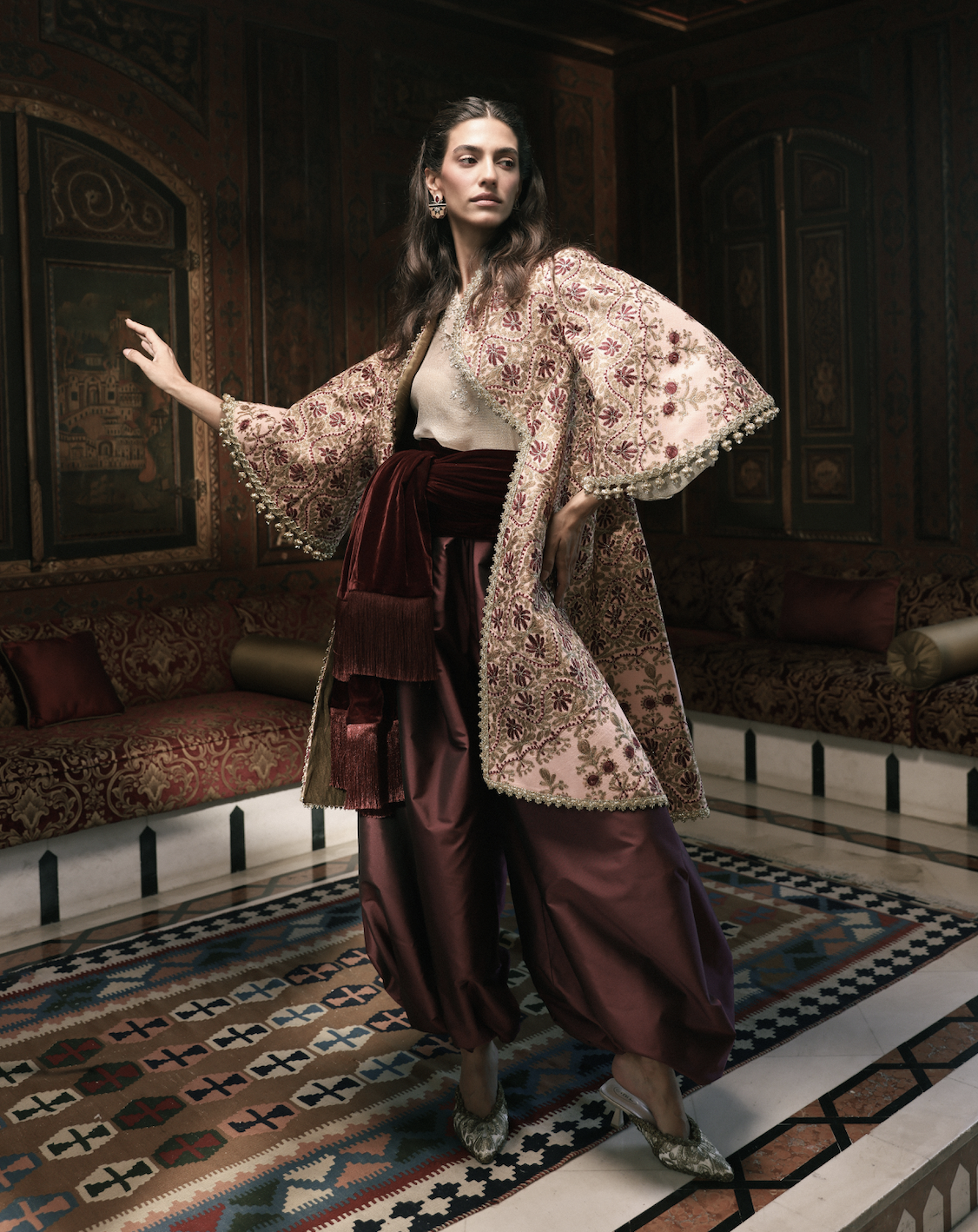
The collection was shot at Lebanon’s Mir Amin Palace, under the creative direction of Victor Concepto. Traditional hand embroidery using metallic thread adorns the 19th-century Kubran coat — a garment that once expressed status, where the richer and more elaborate the embroidery, the higher the wearer’s social rank. Styled with silk taffeta women’s sherwel pants and a sheer silk organza top embellished with metallic embroidery | Photo Credit: Mohamad Khalidi
The lawyer turned fashion designer embarked on a journey with Arabian Moda to show the significance of Lebanese old-world garb, and its fashion history and impact on the world
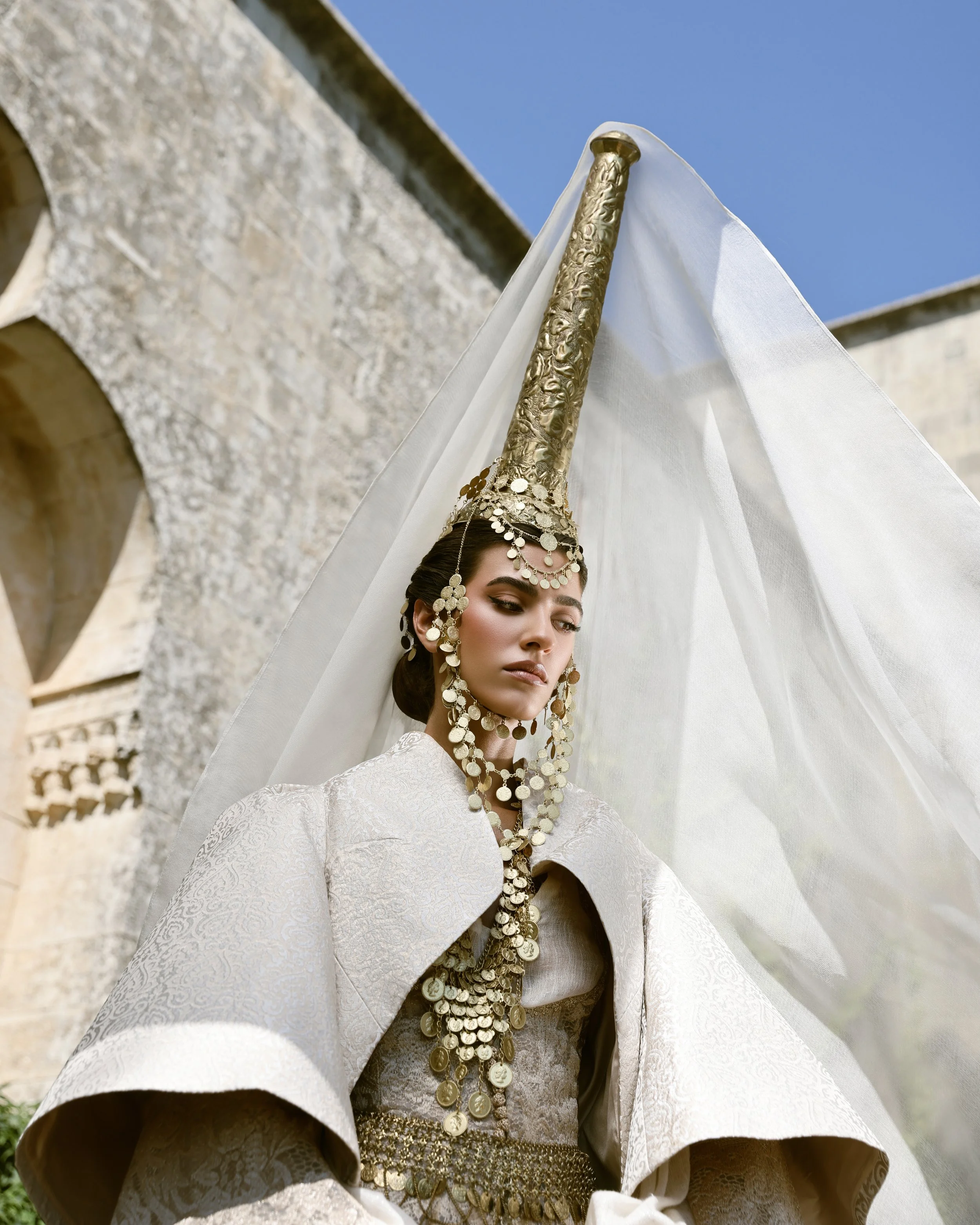
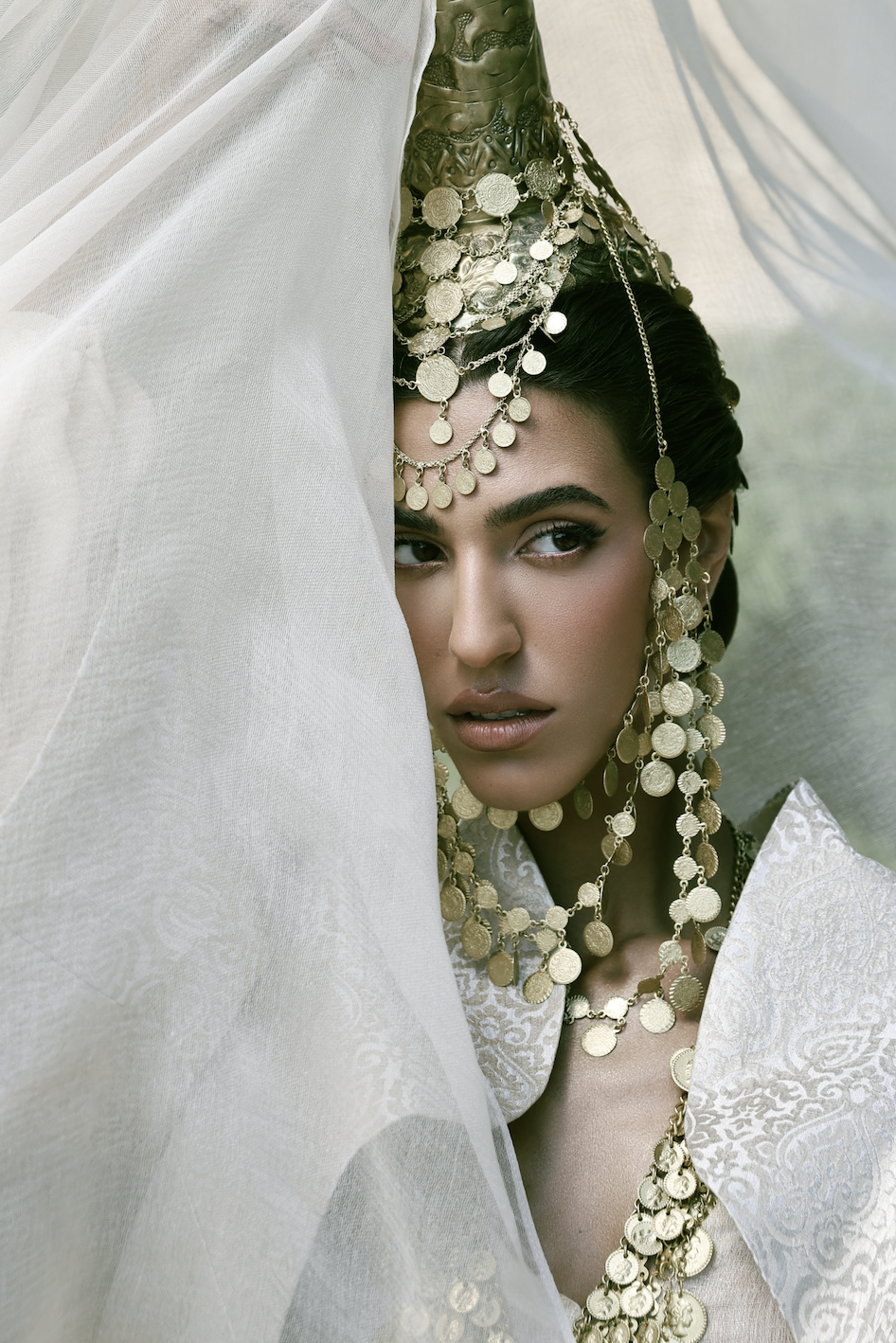
In a Q&A interview, Challita explains why he felt compelled to do something about Lebanon’s fading fashion heritage, identity and craftsmanship. He recreated authentic Lebanese clothing using ṭarq, a traditional embroidery technique he revived a lost art. Plus, the shoot behind the project brought life to the tantour, a tall conical silver headdress worn by Lebanese princesses in the 19th century; and the Qabqab, the elevated pearl-inlaid wooden platform shoes once worn by noblewomen in palaces and hammams.
Seele Magazine: Why did you feel it’s important for the Lebanese — and the world — to know what authentic traditional Lebanese wear looks like?
Joe Challita: For too long, Lebanese fashion has been defined by modern glamour, couture, red carpets, and international acclaim; yet our sartorial identity extends far beyond that. Traditional Lebanese dress is a reflection of our geography, craftsmanship, and collective spirit. Each garment once carried a language of its own such as, symbols of belonging, artistry, and faith harmoniously woven by hand. Through this project, my goal is not nostalgia but cultural restoration. Lebanon’s aesthetic sophistication existed long before fashion became an industry, and it deserves recognition as part of the world’s design heritage.
SM: What contribution does Lebanese traditional fashion bring to the modern-day fashion world?
JC: From the ancient Phoenician city of Tyre, Lebanon gifted the world Tyrian purple ; one of the most powerful colors in history. This dye, extracted from the Murex shell, was once reserved for emperors and still defines luxury today. The fact that “royal purple” traces its origins to our coastline reminds us that Lebanon has shaped global aesthetics since antiquity; not through trends, but through timeless innovation and ingenuity.
SM: What does Lebanese traditional fashion say about the Lebanese sartorial style of yesterday and today?
JC: Lebanese traditional fashion is a reflection of our geography, history, and spirit, which is a crossroads between mountains and sea, East and West. Our style has always reflected refinement in the face of resilience. Historically, Lebanese fashion merged Eastern opulence with Mediterranean restraint; even in the simplest rural garments, there was a sense of proportion, harmony, and poise. That instinct for balance still thrives. Modern Lebanese designers remain true to their heritage, weaving sensuality with the timeless dialogue between East and West. Our fashion identity has evolved, but it has never disappeared; it has simply adapted, just like our people.
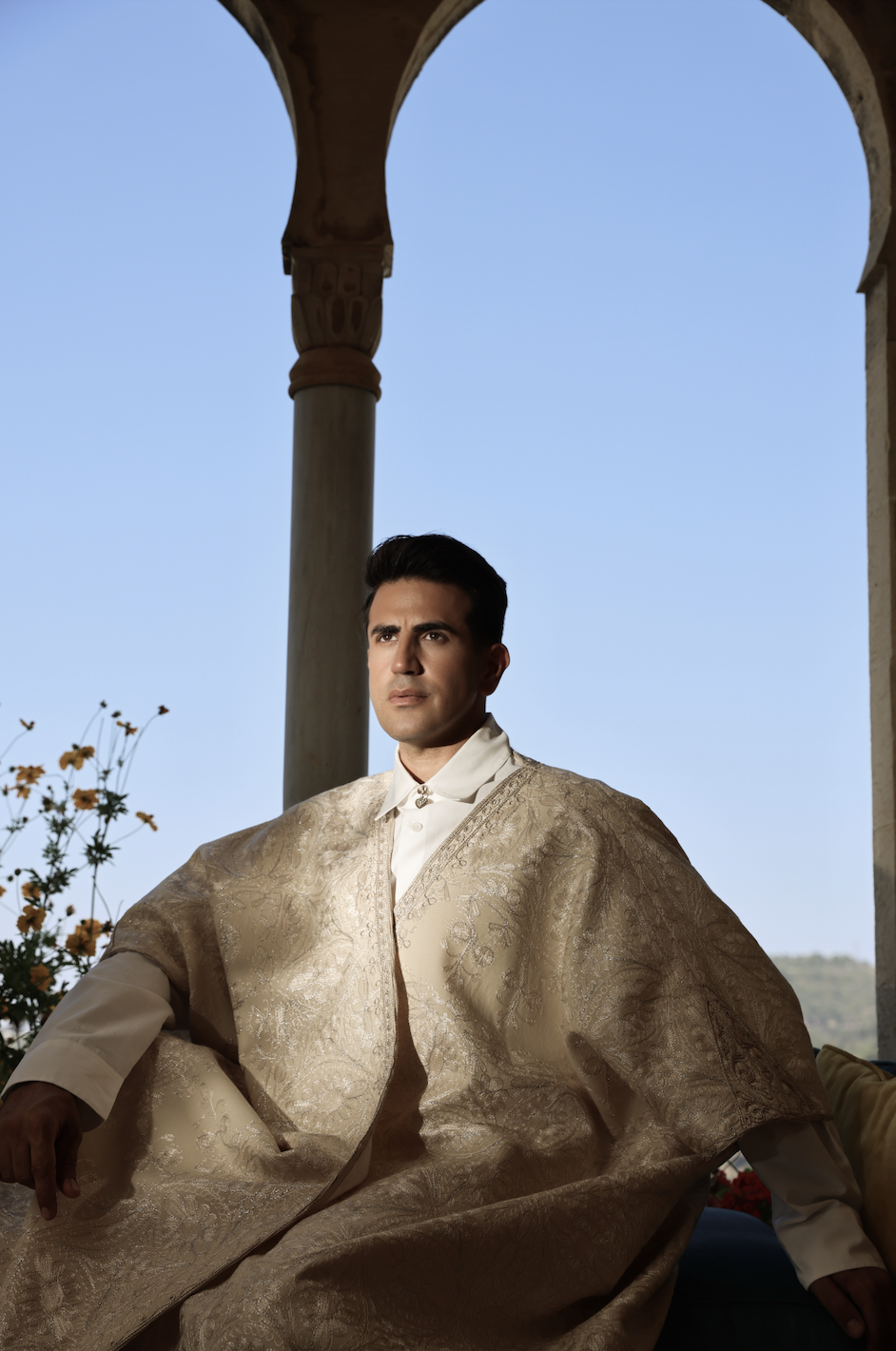
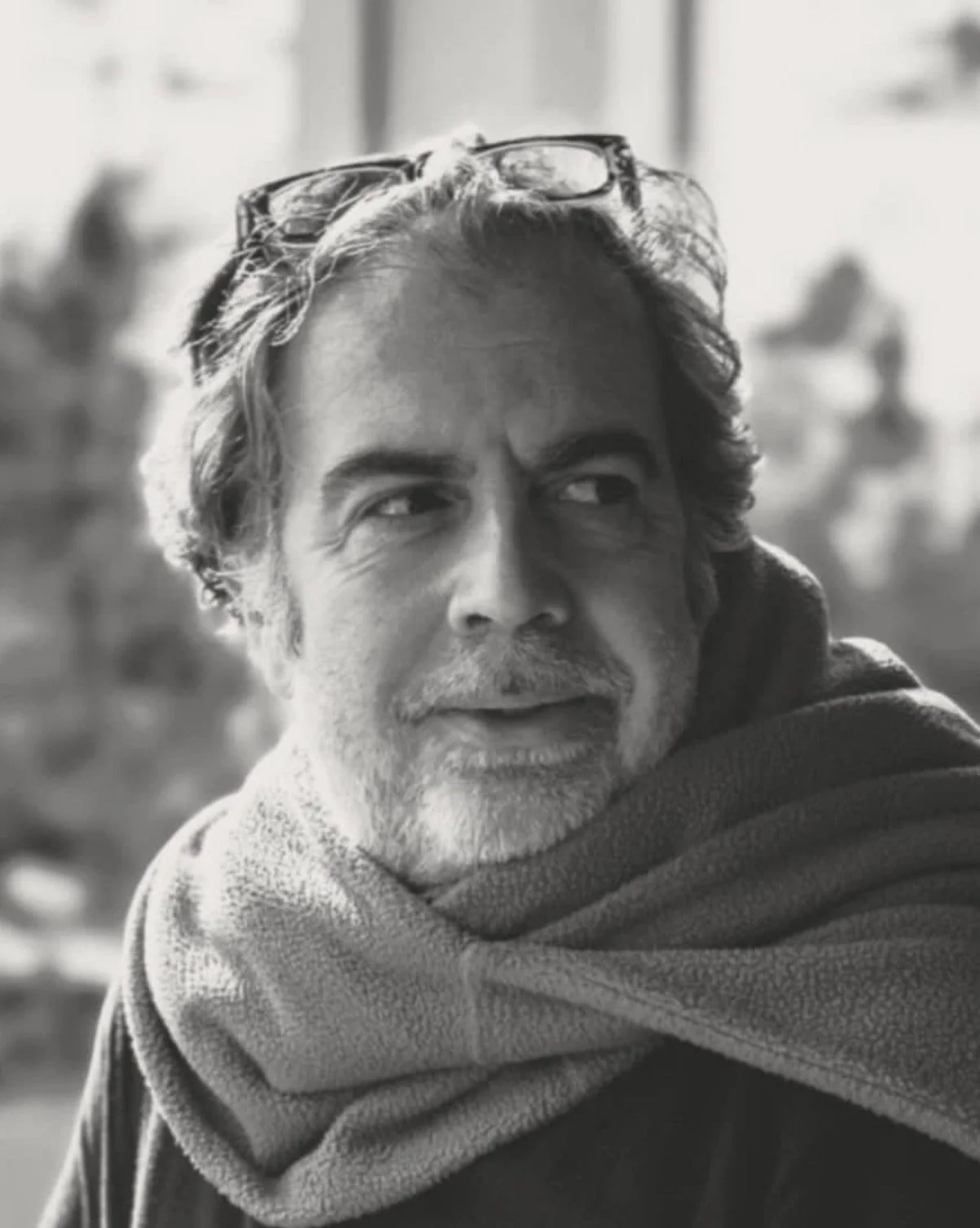
Joe Challita, the fashion historian and connoisseur put passion and energy into this new collection | Photo Credit: Mohamad Khalidi
SM: What did you learn from this project?
JC: That fashion is the most intimate form of storytelling. Through my research, I was often surprised by the depth of what I uncovered. I now understand why Beirut earned the moniker “Paris of the Middle East.” It truly was a cosmopolitan, global, and technologically advanced city; especially during its golden era in the 1960s and early 1970s. Beirut had it all. It was, back then, what Dubai is today — a glamorous hub of fashion, culture, and innovation, but one that had already achieved this stature decades earlier.
European designers flocked to Beirut to showcase their collections, from Carven in the 1950s, to Valentino in the 1960s, and Pierre Cardin and Paco Rabanne in the 1970s. The city was a magnet for creativity and sophistication, a global stage where designers, socialites, and Hollywood stars converged. The world’s royal families flocked to the distinguished Casino du Liban, the first casino in the Middle East, dubbed as the most luxurious casino on the mediterranean. Legendary venues like Les Caves du Roy were born in Beirut before the famed St. Tropez location opened, and the city held exclusive representation for Dior across the entire Middle East. It was a Lebanese entourage, in fact, that traveled to the Gulf to organize couture shows for elite clientele. These discoveries reaffirmed for me that Lebanon was not merely part of fashion’s story but it helped in shaping it.
SM: What was your process like from start to finish?
JC: It began as research and evolved into a form of cultural archaeology.
My goal was never to simply recreate costumes, but to translate memory into form and make the intangible tangible. Through my work, I strive to give life to the stories woven into our heritage, allowing tradition to breathe again in the present. This dialogue extends beyond social media, as I am often invited to universities and design schools to share my process, where students and audiences can experience my archives in person, to touch, feel, and connect.
SM Anything else you want to say about this project?
JC: This project has been nothing short of revolutionary. It has become a point of reference for both established designers and emerging talents, as well as for fashion students who now see Lebanese heritage as a living, creative resource. It is one of a kind in Lebanon and the only platform dedicated to providing genuine and well-researched information on our fashion history.
Over the past two years, my work has ignited a renewed curiosity and pride in our roots. Through my platform, the story of the Tyrian people and their legacy has resurfaced, inspiring local artisans to celebrate it further. Today, we see more designers revisiting traditional costumes, recreating the tantour headdress, and proudly integrating folkloric motifs into their work. The Lebanese diaspora has also reconnected with this heritage, and I receive countless messages from around the world from people eager to learn about our folklore and national dress.
After all, Lebanon has never been a follower in fashion’s global story, but one of its earliest and most enduring narrators; and it’s time the world remembers that.
TRENDING

From statement lobbies to story-driven design, a new generation of hotels is turning a night away into something worth remembering.