
Shaheen P. Parshad opens up on the ecological imbalance due to rampant urbanization…
Nothing beats returning home and finding that you belong. The Bible talks about that a lot; And also, about gardens. My garden has, of late, become an epitome of surprises of the natural kind. If one day it flaunts beautiful wild flowers, on another it is dedicated to the reappearance of some revived old roots lying dormant for decades. And that is not all; the more than 300 ‘dharek’ and a few ‘eucalyptus’ trees that my son and I planted a few years ago have now lent it the semblance of a walled, but small and green sanctuary where birds and animals of all species prefer to halt and rest before proceeding to the nearest wetlands.
This has helped heal the ecological imbalance caused by the felling of trees due to the rampant urbanization of the localities nearby. Since the British missionaries, who founded the Christian mission in Punjab, planted vast gardens around the area that serves as my home, I consider it my bounden spiritual and earthly duty to keep their legacy alive — quite like my maternal grandfather, a bishop, who planted a majority of the trees on this property.
Ensconced in the bustling streets of Amritsar, the city of the Golden Temple, my garden has been an inseparable part of our British-era bungalow. It has always been the pride of our family thanks to the green thumb of my late maternal grandfather. Post his demise, my mother made several value additions to that green legacy, which my son and I are always proud to take forward.
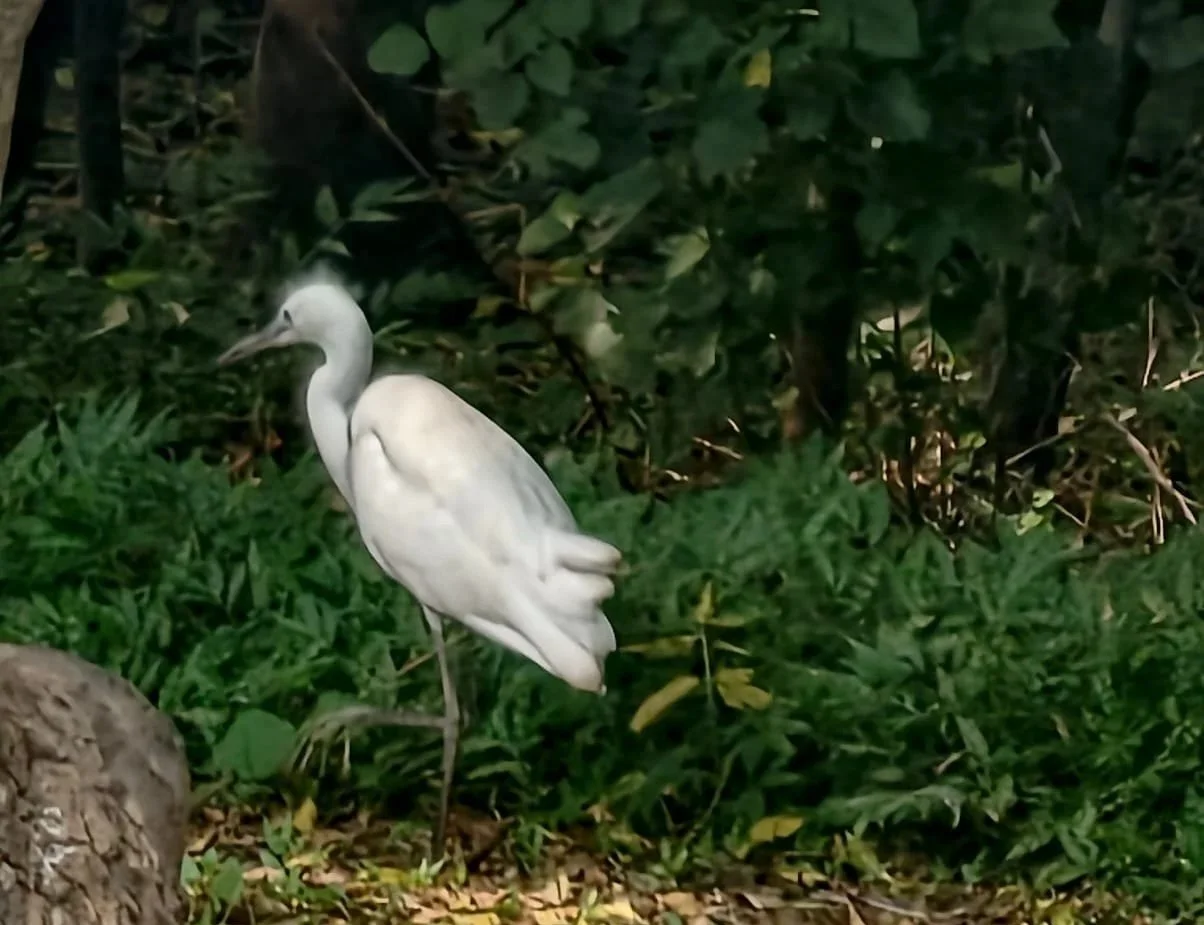
Ever since we added those 300 trees to the landscape almost a decade ago, it has stirred the ecosystem, leading to several ecological miracles, one of which unfolded recently. My son, who has an eye for these, is often the first to notice and picture these marvels. So, it was no wonder when he excitedly rushed in one day. “Mummy, look at what I just captured!”
The excitement in his voice made me drop everything and look at the picture. It was a white egret, perched gracefully amidst a dense canopy of the ‘dharek’ trees. Talking of egrets, they are typically spotted wading through Punjab’s agricultural fields or the distant marshes of Harike Pattan, rather than in the heart of a residential neighbourhood.
For most city dwellers, seeing a wild water bird at home would seem like a rare stroke of luck. Here, however, it is the natural reward of a decade of patience, soil, and shade. While rapid urbanization has steadily replaced many of the city's historic gardens with concrete, our residence stands as a rare green sanctuary, home to more than 300 trees.
In the past decade, we have hosted peacocks too, especially around the monsoon season. And the parrots, owls, and lapwings that had once turned almost negligible have returned home too. What makes them welcome in our garden is not just the abundance of green cover, which constantly remains a target of the landsharks, but also the availability of nourishment, with my son and I and our house help ensuring an abundance of food and water for them at all times.
The arrival of the egret — and a variety of other birds that regularly visit the property — underscores a simple truth about urban wildlife: if you build a habitat, they will come. In a growing city where shrinking green cover and rising summer temperatures are constant concerns, a 300-plus-tree residential property functions as a vital micro-forest. Thick foliage cools the surrounding air, enriches the groundwater, and sustains an entire ecosystem of insects and small organisms. For a foraging egret, such a space offers both safety from city chaos and an abundant, pesticide-free food source.
“When you nurture hundreds of trees, your home stops being just a building and becomes part of the local landscape again,” the sight reminds us. Over the years, this private green lung has quietly become a safe corridor for local biodiversity, bridging the gap between Amritsar’s urban sprawl and the Majha region's broader wetlands.
As November brings crisp winter mornings and heightened bird movement across Punjab, this unexpected guest serves as a gentle reminder of what Amritsar once was — and what it can still be. Not every resident has the space to plant 300 trees, yet the lesson remains universal. Even a few native saplings on a boundary wall, a chemical-free kitchen garden, or an earthen bowl of water on a terrace can turn ordinary rooftops into vital pit stops for the region's winged visitors.
In the end, the egret’s visit is more than just a charming morning sight. It is living proof that nature has not abandoned the city; it is simply waiting for us to leave the door — and the canopy — open.
What we tend in faith, God remembers. God planted a garden when He created this world. Let us ensure we keep doing that as well.
TRENDING


Shaheen P. Parshad opens up on the ecological imbalance due to rampant urbanization…