
Arab Designers At SS26 Haute Couture Week

In a world where this exclusive artform and its clientele is shrouded in secrecy, we unpack why the women in the Middle East are drawn to it, and highlight the designers that stuck out the most
The last week of January and beginning of July is always dedicated to the art of Haute Couture fashion, where connoisseurs turn up to celebrate this elevated artform of the handmade, the embroidered, the assembled only-in-Paris, and the beadwork of it all. This last Haute Couture Week, Arab and non-Arab maisons showed their collections in Paris. It’s a world where Haute Couture and Couture brands are shrouded in secrecy, not unleashing much information or stats about their clients or their sales. But it cannot be discounted that while it is art, it’s also a business that only few can afford, and needs to be sold to remain commercially relevant.
“Couture is a very exclusive artform,” explains Breck Graham the Founder of Black And Paper, who has spent over thirty years in fashion as a buyer and he occasionally styles celebrities for red carpets like Cannes. “There are many designers out there calling themselves Haute Couture, but they aren’t official. There are certain threads, stitching, and techniques that have to be followed to be officially called “haute couture.” Producing Couture is a skilled process that you have to learn how to manipulate, how to sew, and how to handle certain fabrics because a lot of the fabrics are very delicate.”
Arabs are large consumers of luxury. In a study by Mordor Intelligence, the Gulf Cooperation Council luxury goods market was valued at $15.02B USD in 2025, with an estimated growth from $16.53 billion in 2026 to reach $26.66 billion by 2031, at a CAGR of 10.03%. Countries from Saudi Arabia, to the UAE, Bahrain, Kuwait and others are consumers of haute couture. An authentic haute couture piece of clothing starts at $30,000 and can reach up to $800,000. For Arabs that aren’t buying haute couture, they can be seen creating it. Designers from Saudi Arabia, to Lebanon, and Syria came out in full force for the spring-summer 2026 season to present their collections.
The Arab couturiers
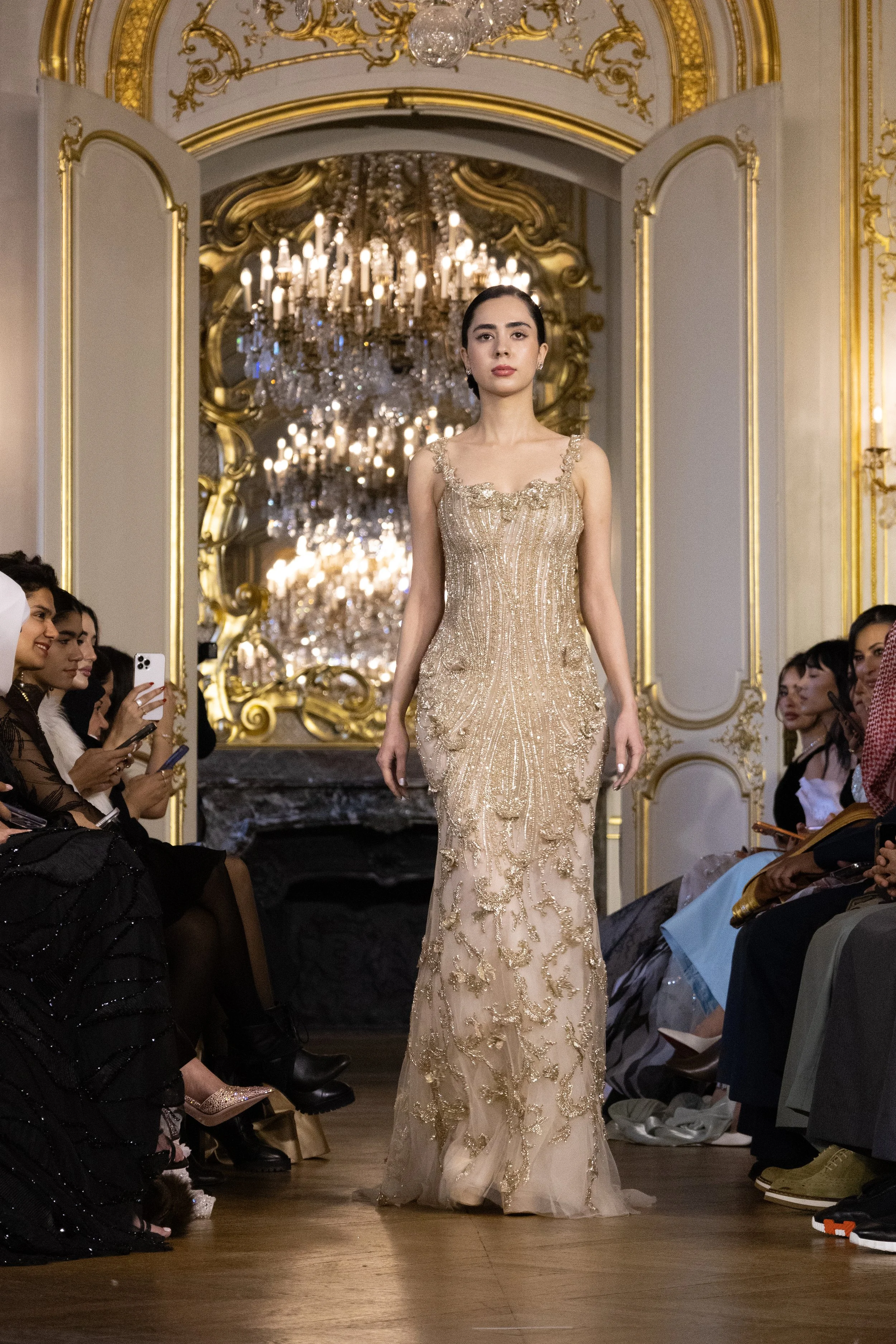
The IKH Fashion show opened Couture Week | Photo Credit: Yevhen Pylypiuk
One of the first brands to open Haute Couture Week was Saudi brand IKH Fashion by Khadija Alsunaidi. The collection “Rebirth,” is ethereal in essence mimicking the wander of a fairytale. Delicate and feminine, its purpose is about more than just fashion. “It’s a story of the many rebirths we experience throughout life, the moments that reshape us, allowing us to grow, bloom, and transform into elevated versions of ourselves,” she explains in notes.
“When it comes to Couture, in the West, designers tend to have frivolity. In the East it’s more about modesty. Arab designers, they’re really bridging two cultures, Couture and modesty. They’re also into wearable pieces with a lot glitter and shine because their customers like the different types of textiles, the architectural angles, designs that are fitted to the body. Quite simply, designs are more sellable because design houses understand their customers very well and what their clients want.” Says Graham.
A report on Arab Luxury 2025-2030 by Luxonomy, shows how Saudi Arabia holds 40% of the Middle East’s luxury market. Designers like Alsunaidi are being championed in the Kingdom to contribute to the creative and private sector economy, as Saudi Arabia lightens their reliance on oil.
Collections by Arab designers during Haute Couture Week are both elegant and wearable, most likely due to the culture being more formal with events to match. “Rami Al Ali plays with the shapes and silhouettes of his pieces. Elie Saab is very extravagant and luxurious, and Georges Hobeika creates romantic silhouettes. Arab designers are very glamorous in their designs, emphasizing classical femininity, and in a way their creations are a throwback to old Hollywood glam,” Graham points out.
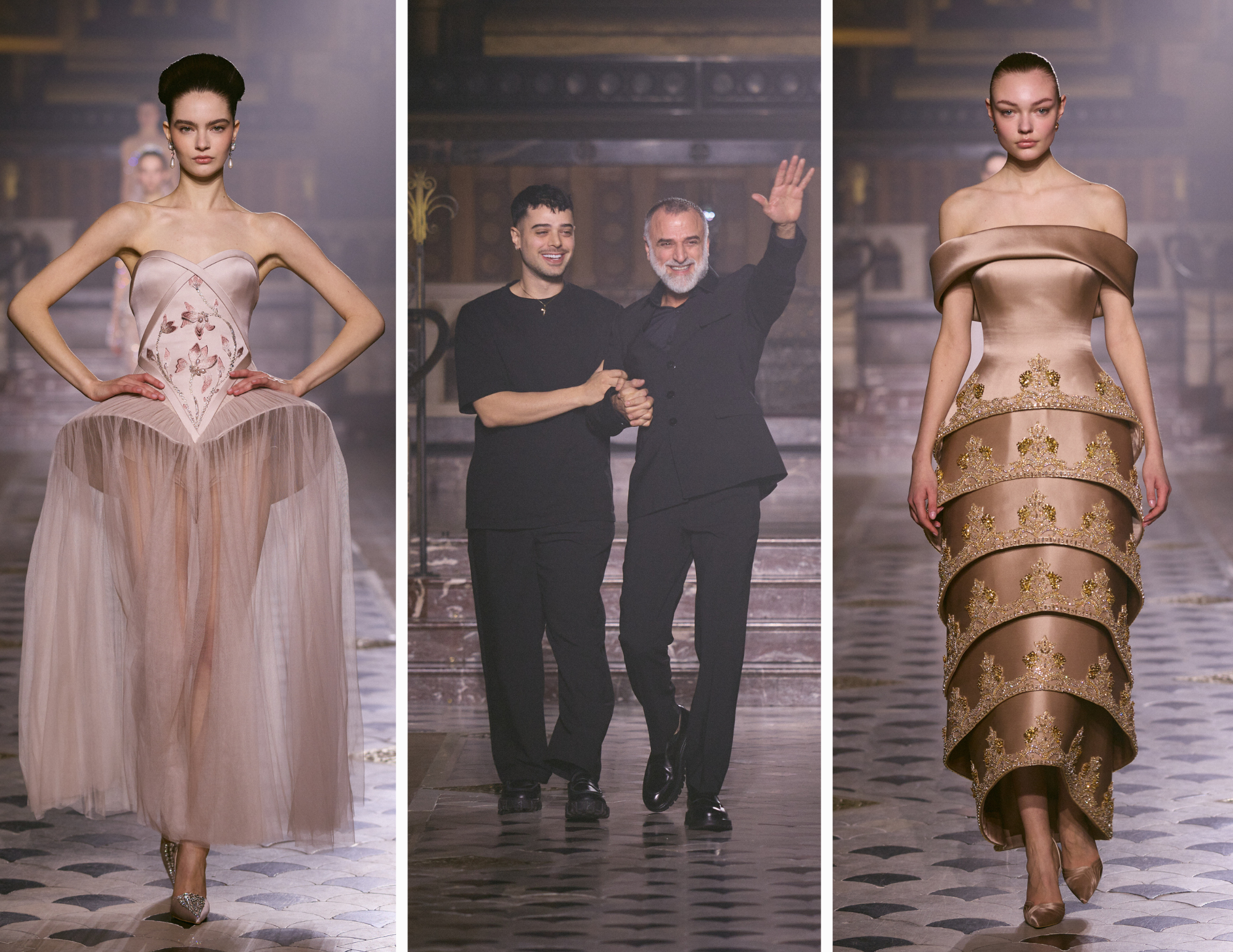
Father and son duo Jad and Georges Hobeika created a collection that sparked a lot of buzz | Photo Provided By: Georges Hobeika
Lebanese designer Georges Hobeika’s collection L’amour challenge people to think about loving. Jad Hobeika, the Co-creative Director and his father Georges invite all think about loving, even when it’s hard. Regal, feminine, and intricate, the collection sparkles with lots jewels. Corsets are snatched and stiff, colors are spring in nature, and love flows throughout the detailing and glamor.
Tony Ward held his runway show at the Galerie de Geologie of Mineralogy, a fitting location. All about light and how it diffracts, morphs, and reflects, the collection is about how Couture asserts itself into a prism of light. Gowns have disassembled fragments from glass, crystals, and precious stones rearranged in a precise geometric way, giving the feminine form an architectural look. The handbags for the collection are by renowned luxury handbag designer Tyler Ellis. Their limited-edition collaboration is a reinterpretation of Ellis’ Perry and Eloise minaudières.
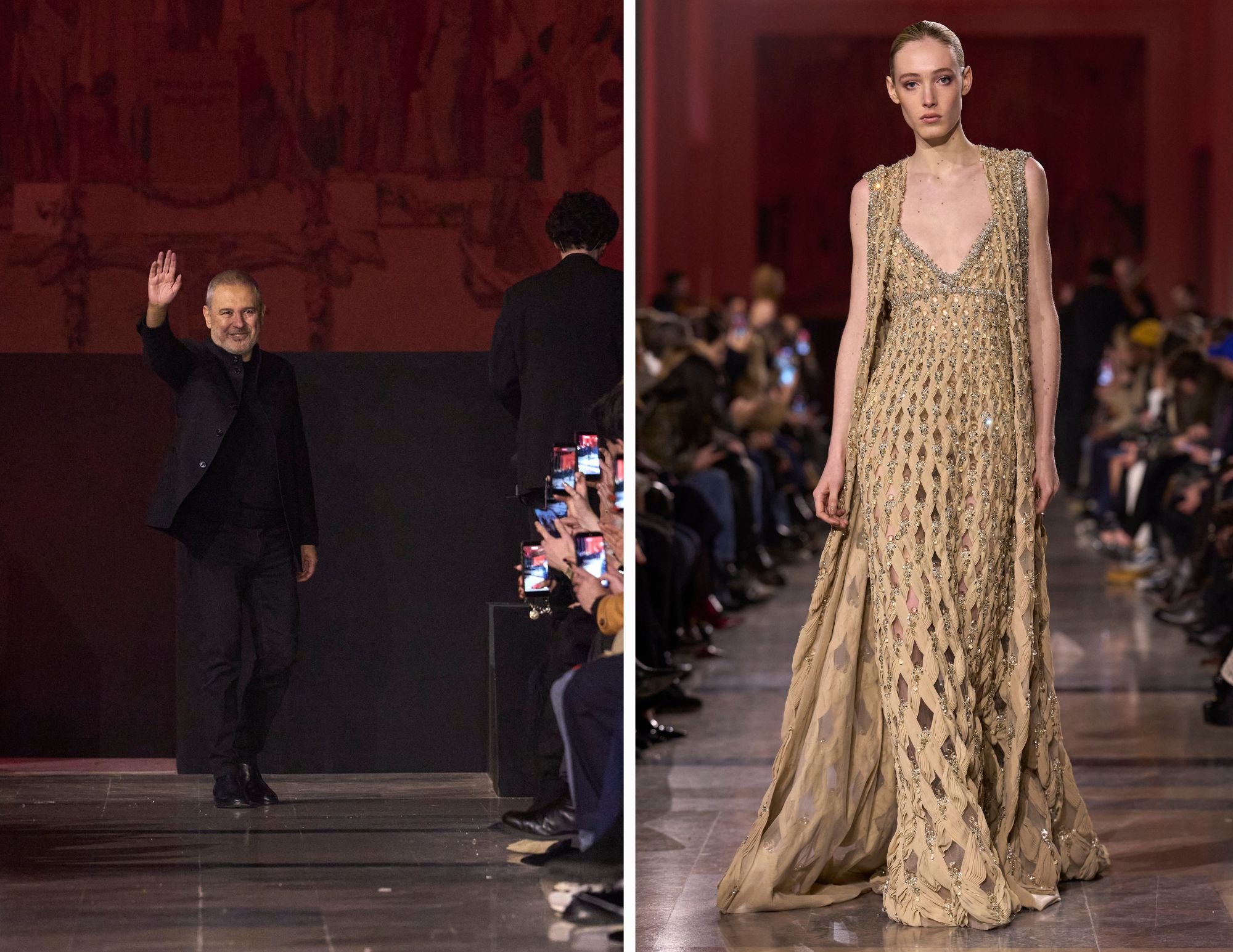
Mr. Elie Saab presented a collection that’s all about the 70s jet set | Photo Provided By: Elie Saab
World renowned designer Elie Saab drew a crowd in Trocadéro overlooking the Eiffel Tower, with Lebanese actress and singer Haifa Wehbe creating a buzz after the show. The designer who comes from humble beginnings in Lebanon’s Faraya, has built up a brand that’s valued at $792 million, according to Fashion United. It’s collection where couture is balanced with a hedonistic soul, that’s set between Milos to Marrakech, and exudes the gilded summer evenings amongst the 70s jet-set. Which, matches the Elie Saab aesthetic as the brand has opened up branded residences from London, to Andermatt, Dubai, Casablanca and more.
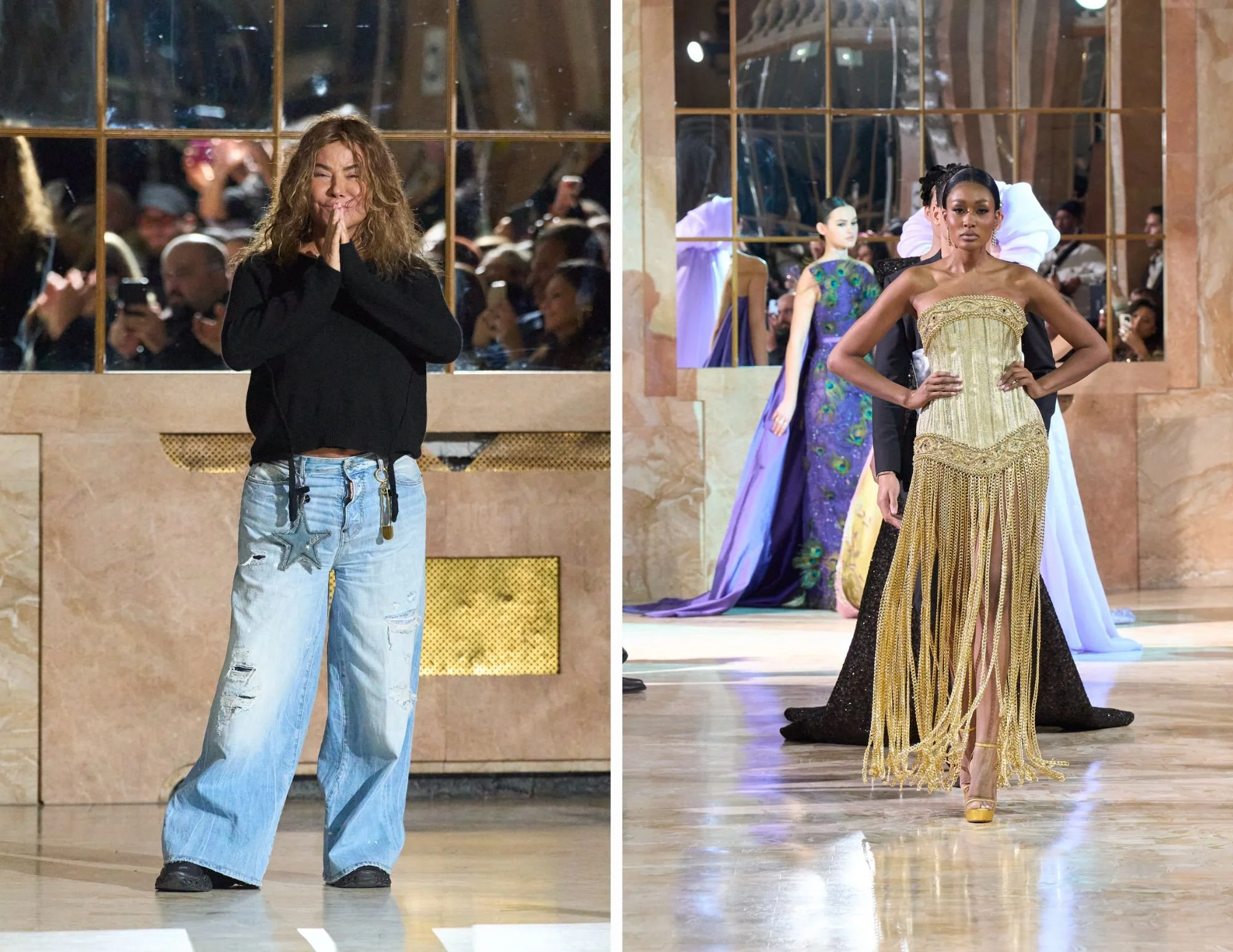
Robert Abi Nader is one of the first Lebanese designers that emerged on the scene in the mid 80s | Photo Provided By: Robert Abi Nader
Robert Abi Nader’s Aurora Borealis collection infused art and nature- a signature element of his design style. Strength through grace was his mission in designing, and that’s why he chose taffeta, silk duchesse satin, airy chiffon, and fluid silk crêpe. Hand-embroidered sequins, baroque inlays, and sculpted metal corsets bring structure to this strength. And, tailored and embroidered jackets for men are most poignant.
Georges Chakra evolved his brand from a Beirut household name to a global brand, getting featured in 2006’s The Devil Wears Prada, and he like his Lebanese counterparts are fixtures on Hollywood awards season red carpets. His focus this season is on the brand’s heritage and a mix of Parisienne spunk. Flamboyant and grand shapes with ballooned hemlines that lift the skirt away from the body, and Elizabethan corsets give way to structure and armor-like bodices. Carrying a strong yet feminine vibe, the collection is for the woman who knows who she is and where she’s going.
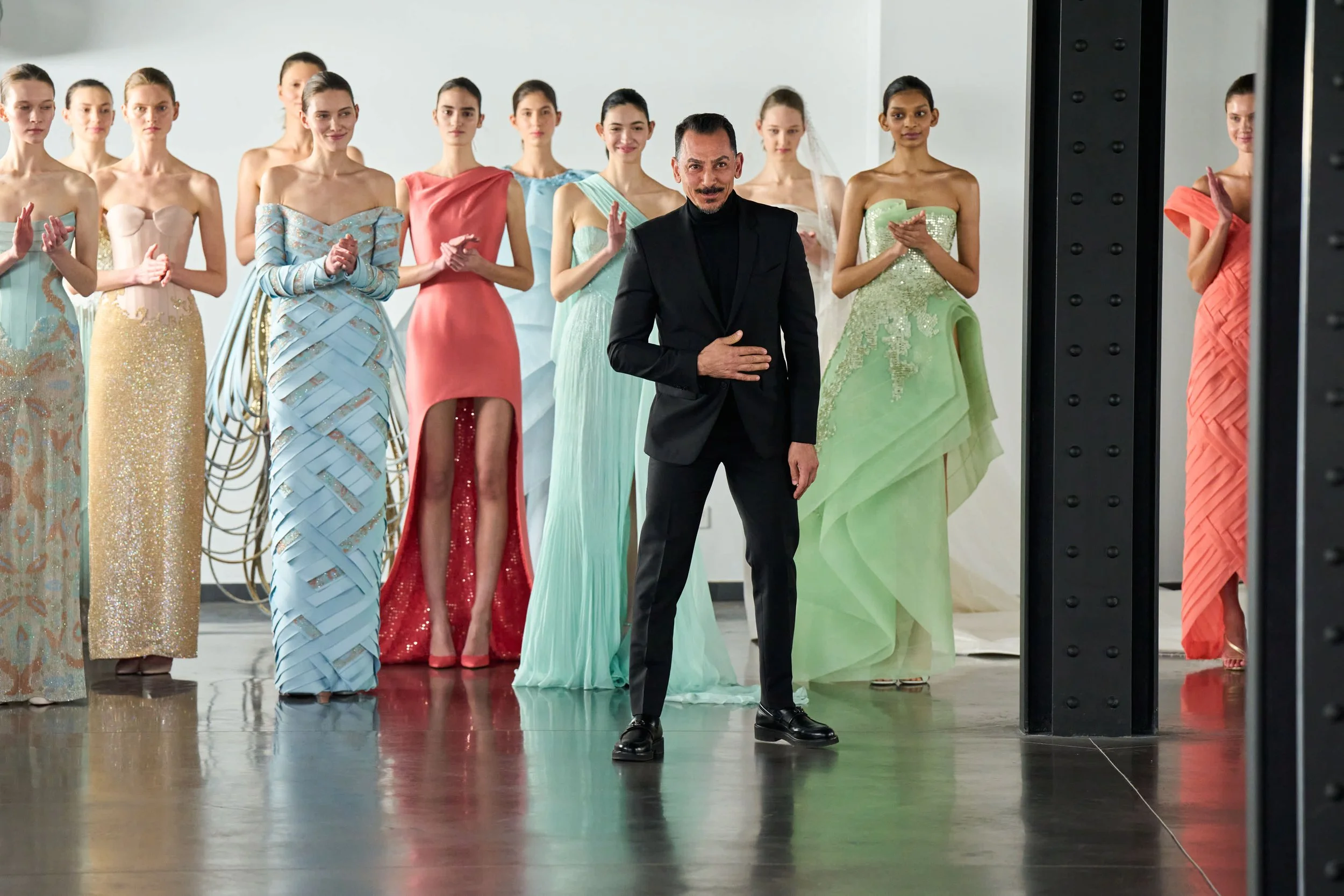
Rami Al Ali closed out Haute Couture with a collection of gowns inspired by the philosophy of Rumi | Photo Provided By: Rami Al Ali
Syrian designer Rami Al Ali, became an official Guest Member on the Haute Couture calendar in June 2025, and he closed out fashion week with his Fragments In Harmony themed collection. Taking inspiration from the philosophy of Rumi, a 13th century Persian mystic poet, the collection takes his message of transformation to reconciliation to heart. Looks are made to flow, as they evolve with the body. Al Ali collaborated with Persian composer Shora Karimi, and created music inspired by verses from Rumi’s Mathnawi, with poetry verses being sung by vocalists.
The reality of haute couture
There are about 4,000 couture collectors in the world, with 1,000-2,000 being regular clients that can afford it, according to findings presented by the Italian fashion school Istituto Marangoni. And these clients come mainly from Russia, China, and the Middle East. And not just any garment can be considered Haute Couture. It’s the French word for “high dressmaking,” it’s regulated by the Chambre Syndicale de la Haute Couture, who does yearly checks on its members to ensure that there are at least 15 full-time staff and 20 technical workers working in the company at one time. Garments must be tailored-made and require one or more fittings, every piece must be handmade and intricate in detailing, the designer must operate an atelier in Paris, and there has to be at least 50 original looks in a collection with day and evening wear being presented every January and July- in Paris.
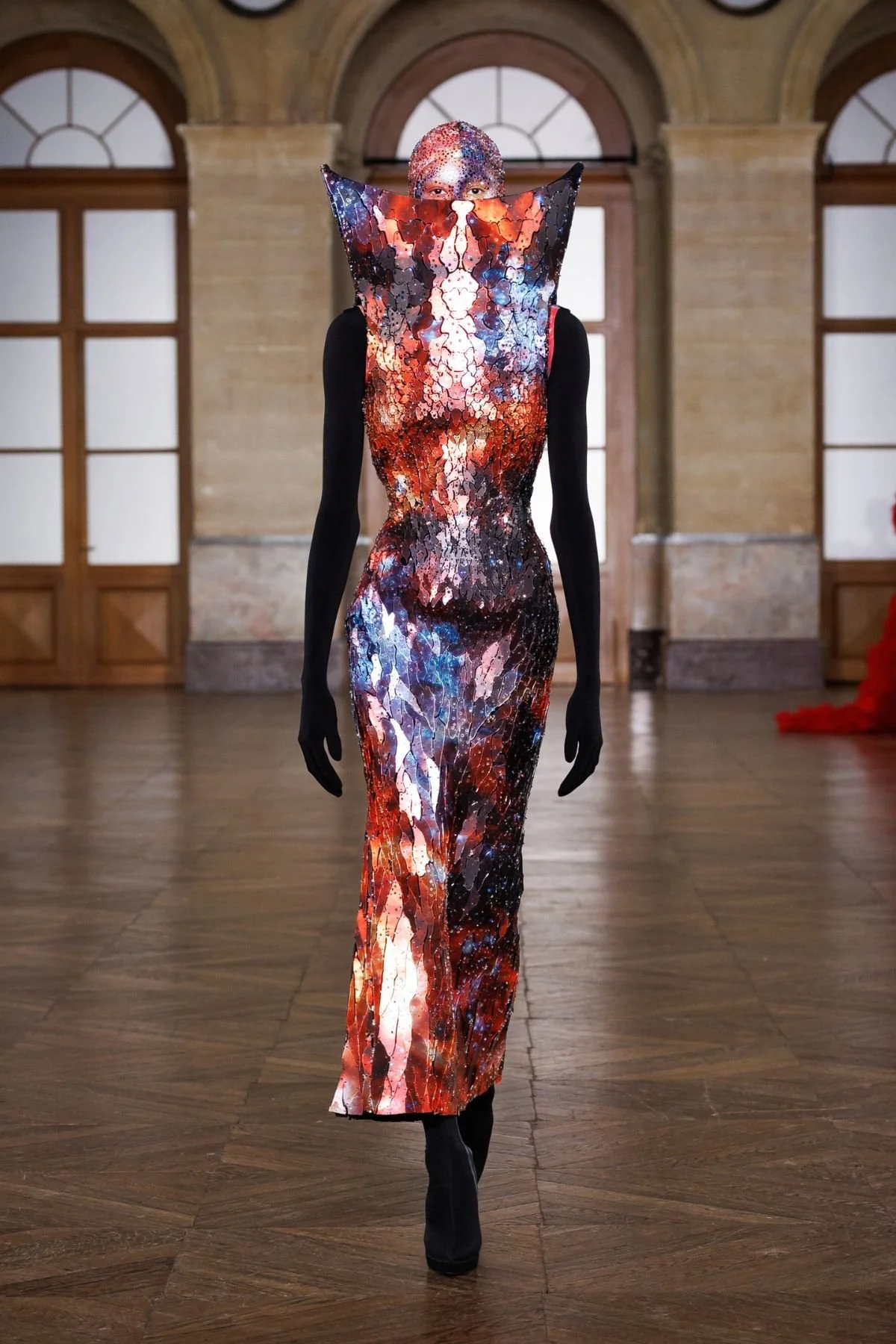
Indian couture designer Gaurav Gupta’s collection garnered a lot of attention | Photo Provided By: Gaurav Gupta
For a non-Arab couture designer that excelled on the runway, it is Gaurav Gupta’s collection that caught a lot of global buzz. Themed, Divine Androgyne it’s focused on the dichotomy of masculine and feminine, and how one can’t live without the other. As a result, both give way to inner light through 900 hours of embroidery and a collaboration with 50 artisans. “Every silhouette in this collection is built as a living structure. We are not decorating the body, we are mapping consciousness, memory, and movement onto it through craft, architecture, and time,” explains Gupta in notes.
Haute Couture Week is smaller and more exclusive than women’s Ready-to-Wear Week, that sits a month out. The week of high fashion is where Arab talent really gets to shine, and the world is reminded how this craftsmanship impacts this exclusive artform. “It’s an exclusive world of small lists and very few people know who buys actual Couture. We know they’re out there but it’s a world that’s very secretive, especially now. And in the Arab world, when women buy Haute Couture, it’s behind closed doors. Some of them are only wearing these pieces just for their friends, they don’t even go out to dinner in them. Couture for women is like buying a Rolls Royce for men,” says Graham.
TRENDING

From statement lobbies to story-driven design, a new generation of hotels is turning a night away into something worth remembering.